
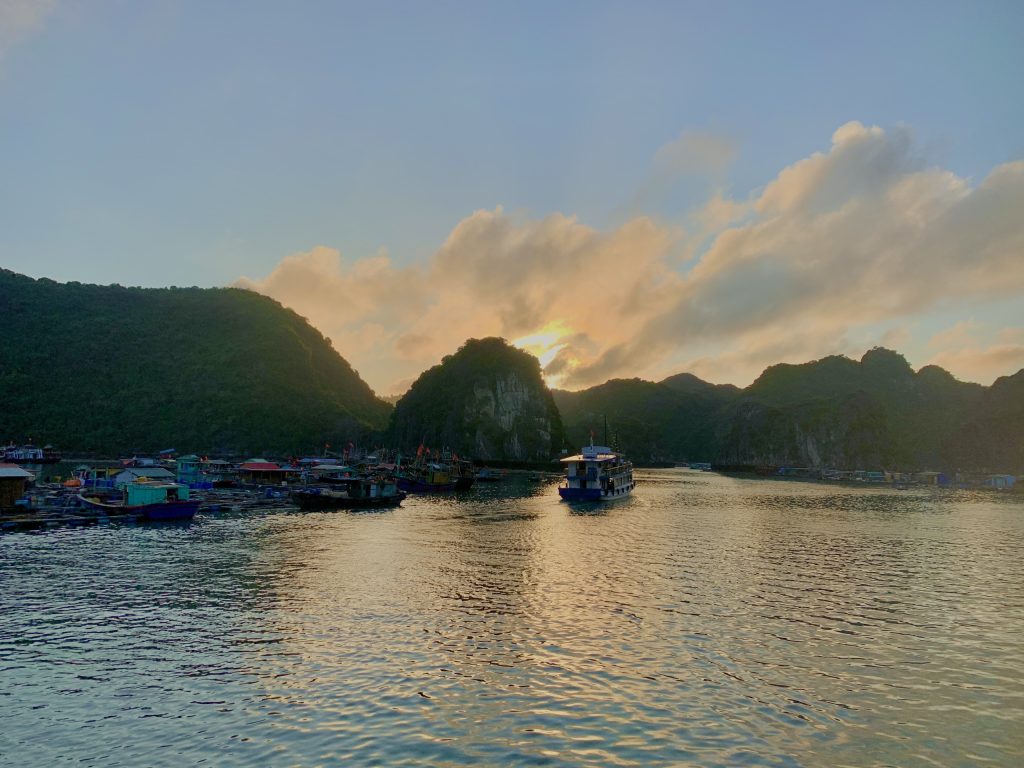
The best time to visit Cat Ba Island is late September to late November, with October the single best month: dry, warm days of 24–29°C, calm seas and the summer crowds gone. “When should we come?” is the question we answer most often. We are the Lan family, and we have lived in Viet Hai village, a farming valley inside Cat Ba National Park, for many years. We watch this island change character every month, and the honest answer is that Cat Ba has no bad season, only seasons that suit different travellers.
| Best overall | Late September to late November — dry, 21–29°C, calm seas, thin crowds |
| Best for swimming | May to August — sea at its warmest, brightest water, busiest and most humid |
| Best for trekking | March–April and November–December — cool trails, clear ridges |
| Storm window | July to September — boats stop for a day or two under a storm warning; keep a spare day |
| Busiest weeks | Early June to late August, 30 April–1 May, 2 September, Tet week (January–February) |
| Cheapest | December to March, outside Tet |
This guide is what we tell friends: the real weather, the real crowds, and the months we quietly recommend to guests who want the island closer to how we know it.

The short answer
- Best overall: late September to late November. Dry, warm days, low humidity, calm seas, and the international crowd has not yet peaked. This is our own favourite time.
- Best for swimming and the bay: May to August. Hottest water, brightest turquoise, longest daylight — but also the busiest and most humid.
- Best for trekking and quiet: March to April, and December to February. Cool air, empty trails, lowest prices.
- Most unpredictable: July to September. Beautiful, but this is northern Vietnam’s typhoon window. Build a spare day into your plan.
Cat Ba month by month
| Month | Typical weather | Sea & crowds | Our take |
|---|---|---|---|
| January | Cool, 15–20°C, often grey and misty | Cool water, very quiet | Atmospheric and cheap. Bring a jacket — winters here are damp, not dry. |
| February | Cool, 16–21°C, light drizzle | Quiet except Tet week | Lunar New Year falls in Jan–Feb; the island fills with Vietnamese families for about a week, then empties again. |
| March | Mild, 19–24°C, morning mist | Calm, very few visitors | Trekking heaven. Karsts float in and out of the mist — the most photogenic month if you like moody light. |
| April | Warm, 23–28°C, drying out | Sea warming, picking up | Excellent all-rounder. Everything is green after the spring drizzle. |
| May | Hot, 26–32°C, humid | Warm sea, busy from late May | The bay turns its brightest turquoise. Start early, rest at midday. |
| June | Hot, 28–34°C, afternoon showers | Peak Vietnamese holiday season | Busiest month in Cat Ba town. Viet Hai stays calm — one reason guests come inland. |
| July | Hot, 28–34°C, storm risk begins | Very busy, warm sea | Wonderful when clear, disrupted when a storm passes. Keep your itinerary flexible. |
| August | Hot, 27–33°C, highest rainfall | Still busy, sea warmest | Rain usually comes in short heavy bursts, not all-day grey. Mornings are often perfect. |
| September | Warm, 26–31°C, storms easing | Domestic crowds gone | The turning point. From mid-September the island feels like it exhales. |
| October | Warm, 24–29°C, dry and clear | Calm seas, comfortable crowds | Our top pick. Clear skies, gentle heat, perfect kayaking water. |
| November | Mild, 21–26°C, dry | Calm, international season | Second-best month. Cool enough to trek at noon, warm enough to swim. |
| December | Cool, 17–22°C, mostly dry | Quiet, cool water | Crisp and clear on good days. Lowest room rates of the year. |
Temperatures are typical ranges, not guarantees — northern Vietnam’s weather moves quickly. Check a forecast a few days before you travel.
The rainy season is not what you think
Travellers often cancel summer plans because they read “rainy season” and picture a week of grey drizzle. That is a European autumn, not a Cat Ba summer. Here, June to August rain usually arrives as a heavy afternoon burst that clears within an hour, leaving the air washed and the karsts unusually sharp. Mornings in the rainy season are frequently the most beautiful of the whole year.
What genuinely disrupts a trip is a tropical storm, and those are concentrated between July and September. When one is forecast, ferries and boat tours stop for a day or two as a safety measure. If you travel in that window, our only real advice is to leave one spare day in your Vietnam itinerary. Guests who plan a tight schedule are the ones who end up disappointed.
When the island is busy — and where it isn’t
Cat Ba’s crowd calendar is driven by Vietnamese domestic holidays, not international ones. The peak runs from early June to late August, plus the 30 April–1 May public holiday and 2 September National Day. In those weeks Cat Ba town’s waterfront is full, restaurants queue, and boat tours sell out.
There is a second layer to consider in 2026: the ongoing Cat Ba Central Bay development in the town centre, with land reclamation and construction bringing dust, noise and restricted access to parts of the waterfront. The natural side of the island — Lan Ha Bay, the national park, the beaches, our valley — is untouched. But if you were planning to base yourself on the town promenade, it is worth knowing.
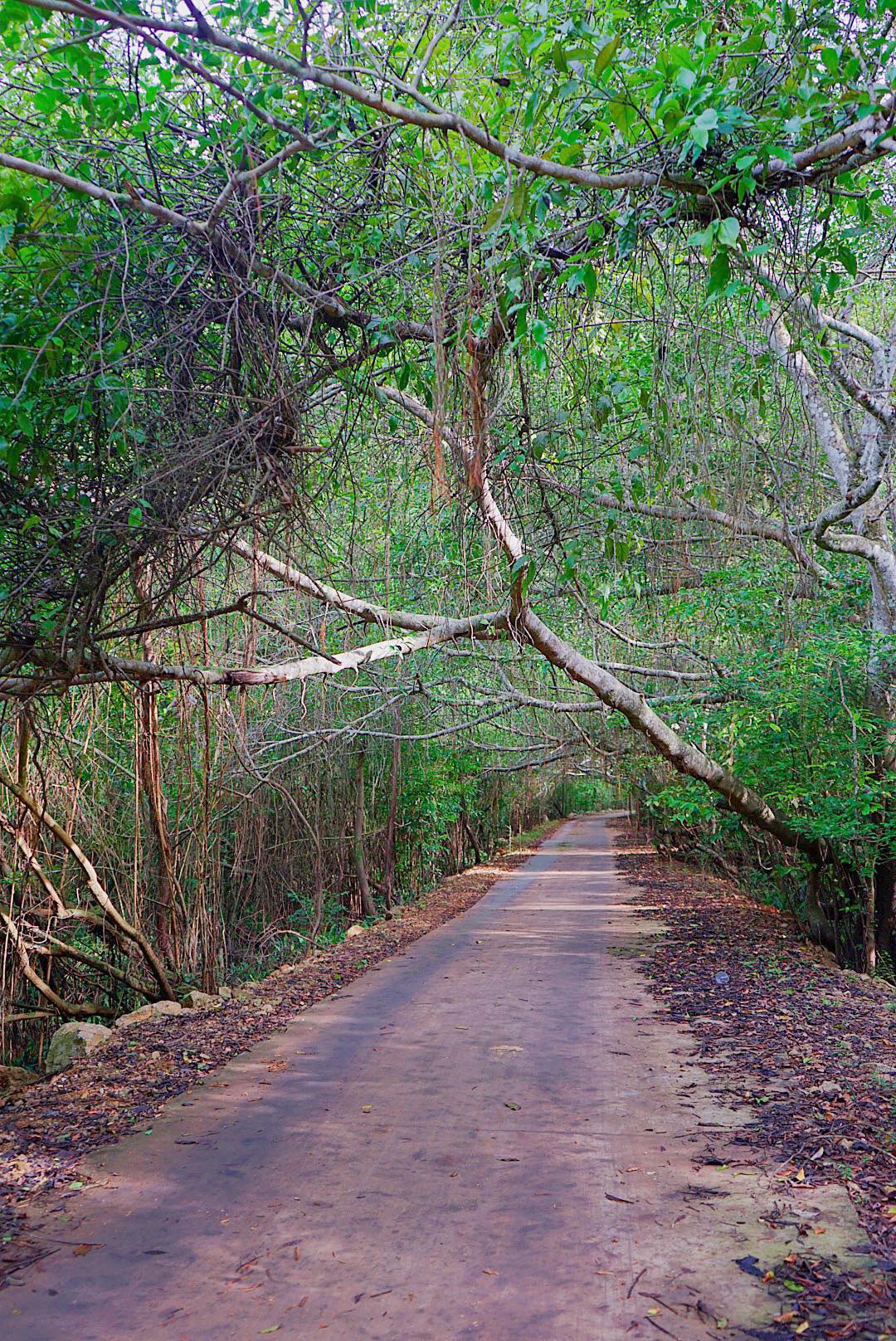
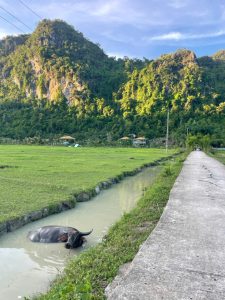
This is why we are honest with guests about geography: Viet Hai village sits an hour by boat and bike from the town, inside the national park. No road links the valley to the rest of Cat Ba — not by regulation, but by geography — so there is no through traffic here. In August, when the town is at its loudest, our valley still sounds like buffalo bells and cicadas. We are not the right choice for travellers who want nightlife. We are the right choice for the opposite.
The full-day Lan Ha Bay boat tour sails from March to November whenever the bay is open; from October onwards it is the calmest, clearest water of the year. On the darkest nights between May and October the sunset and night kayaking adds bioluminescent plankton to the day. In the cool months the Navy Peak hike (259 m, about 3 hours return) is at its best. Rates move with the season and group size — ask us for the current one.
Choosing your month by what you came for
If you came for the bay and the water
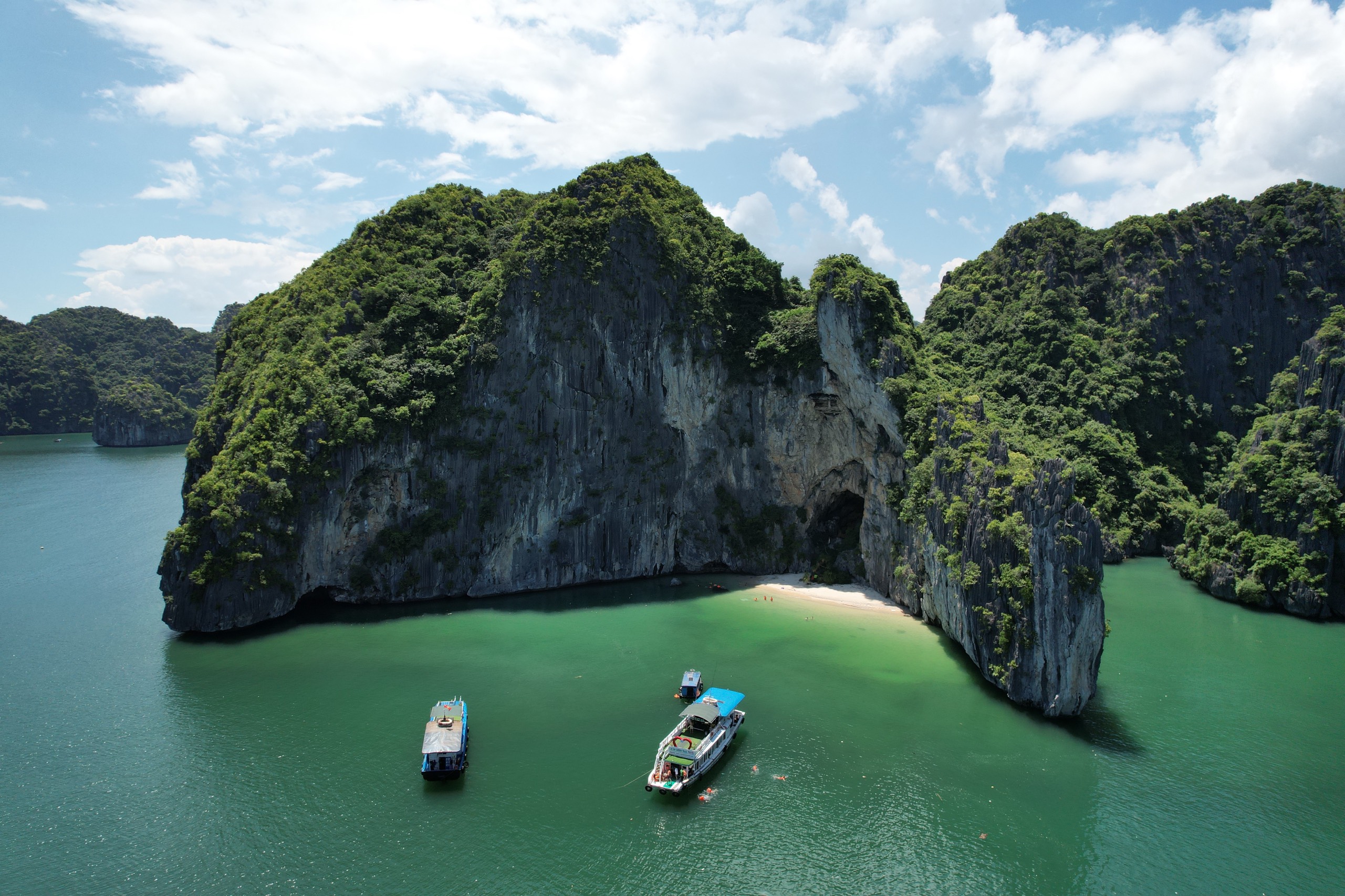
Aim for May, June, September or October. The sea is warm enough to swim without thinking about it, and the water reaches that impossible green colour in strong sun. Kayaking is comfortable year-round, but summer and early autumn are when the lagoons look like the photographs. Our guests usually pair a full-day Lan Ha Bay boat trip with an afternoon of kayaking straight from the beach.
If you came to trek
Choose March, April, November or December. Cat Ba National Park trails are steep, humid and shaded; in July heat they are hard work even for fit walkers. In the cool months you can climb to a viewpoint at midday and still enjoy it. Cooler months also improve your chances of seeing wildlife on the quieter trails.
If you came for quiet and low prices
Come in January, February (avoiding Tet week), March or December. Rooms are at their cheapest, boats have space, and you may have entire trails and beaches to yourself. Bring layers — a damp 17°C feels colder than the number suggests.
If you are travelling with children
October and November are the easiest: warm but not exhausting, calm seas for boat trips, and fewer crowds to navigate with small legs. Our valley is a rare place where children can cycle on a road with no traffic on it.
What the seasons look like from our doorstep
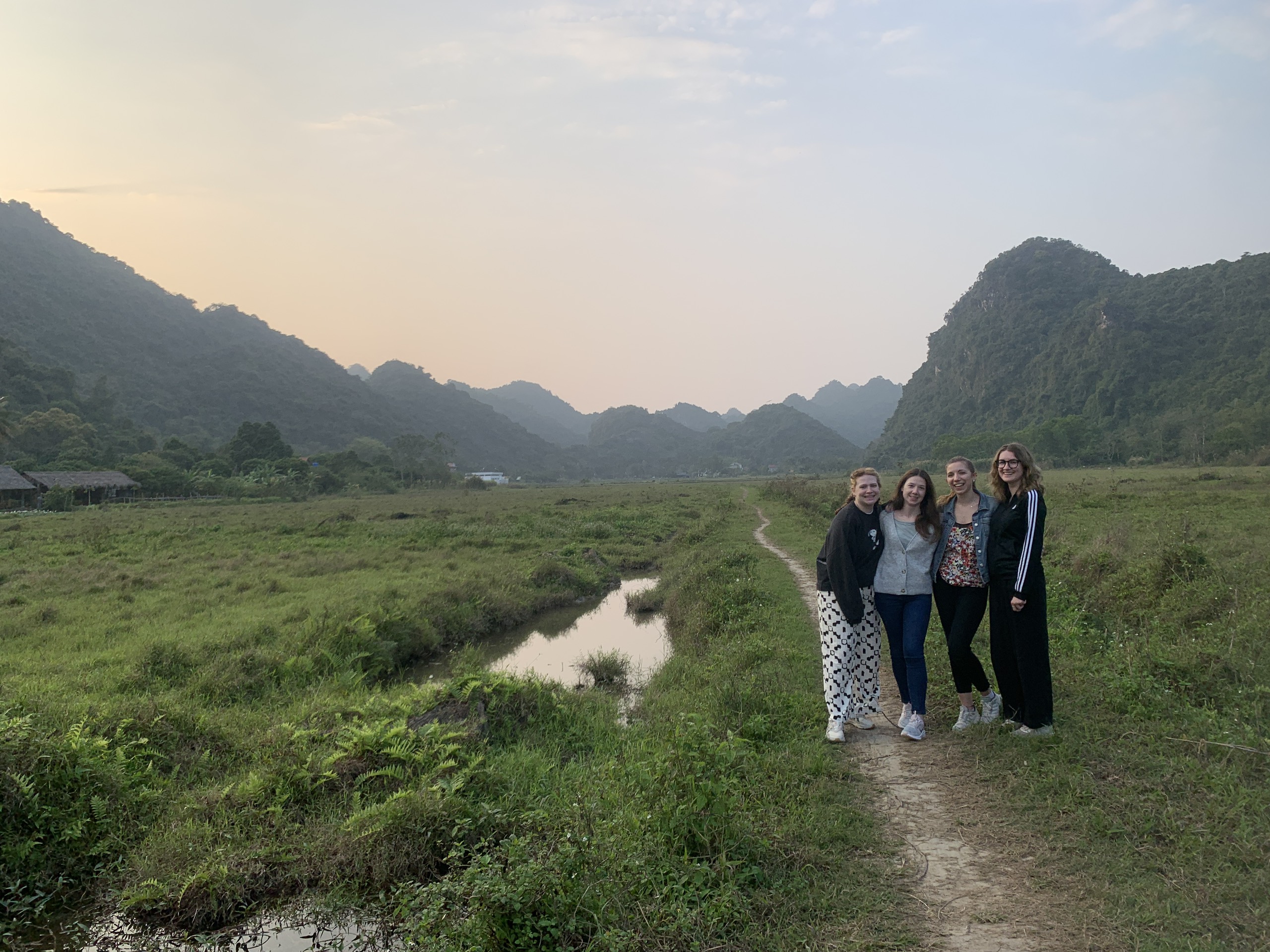
Guests often ask what actually changes here through the year, so: in spring the valley is loud with frogs and the rice goes in. Summer brings heat, storms and the deepest green we get. By late September the rice turns gold and the light softens — that is the fortnight we would choose if we could only visit once. Winter is quiet and misty, and the kitchen turns to slow-cooked pork, ginger and hot broth. The village looks completely different in February and August, and both are worth seeing.
Practical notes whatever month you pick
- Ferries and boats stop in bad weather. This is a safety rule, not a scheduling problem. Leave a buffer day.
- Book early for June–August and Vietnamese holidays. Rooms and boat seats genuinely run out.
- Bring one warm layer between November and March. Nights in the valley get cool, and boats are windy.
- Mosquito repellent matters most in summer, particularly at dusk near the rice fields.
- Reaching Viet Hai takes planning in any season. Boats to the village run on a schedule, not on demand — message us before you book your ferry and we will match the timings for you.
Frequently asked questions about the best time to visit Cat Ba
Answered by the Lan family in Viet Hai — the people who run the boats, cook the dinner and pick you up at the pier.
What is the best month to visit Cat Ba Island?
October. Days of 24–29°C, dry skies, calm seas and the domestic holiday crowd gone. November is a close second — cool enough to trek at midday, still warm enough to swim. If you can only choose one fortnight, late September to mid-October, when the rice turns gold in the valley.
Is Cat Ba worth visiting in the rainy season?
Yes. From June to August rain usually comes as a heavy afternoon burst that clears within the hour, and mornings are often the clearest of the year. The real risk is a tropical storm between July and September, which stops all boats for a day or two. Leave one spare day in the plan and summer works well.
Can you swim in Lan Ha Bay in winter?
Some people do; most do not. From December to February the water is around 18–21°C and the air 15–22°C with mist. Winter is for trekking, cycling and quiet, with the lowest room rates of the year, and the bay is at its most atmospheric from a boat even if you stay dry.
When is Cat Ba most crowded?
Early June to late August, when Vietnamese families are on school holidays, plus the 30 April–1 May holiday, 2 September and Tet week in January or February. Cat Ba town fills, boats sell out and rates rise. Viet Hai stays calm even then, because the day boats leave by late afternoon.
When is the best time for kayaking and bioluminescent plankton?
Kayaking is comfortable year-round; May, June, September and October give the brightest water. The bioluminescent plankton shows best from roughly May to October, on the darkest nights of the month, and is never guaranteed — check the moon before you book the night paddle.
Which months are best for families with children?
October and November: warm but not exhausting, calm seas for boat trips, few crowds and no storm warnings. April is a good third choice. In July and August plan mornings and late afternoons only, rest at midday, and keep an extra day in case a storm closes the bay.
Planning your dates?
Tell us which month you are thinking of and what you want from the trip — bay, trails, quiet, children — and we will say honestly whether it is the right season for that plan, including when it is not. WhatsApp +84 363 934 325 or send a message here — we answer in English, usually within the hour.
Read next
- Cat Ba Island travel guide
- Cat Ba itineraries for 2, 3 and 5 days
- 2 Days in Viet Hai — our signature trip
You may also like


Where to stay in Viet Hai
If this trip brings you into the village, the rooms and bungalows at Lan Homestay are a few minutes on foot from the centre: the garden bungalow (triple) works well for families, and the mountain-view double room for couples.
