
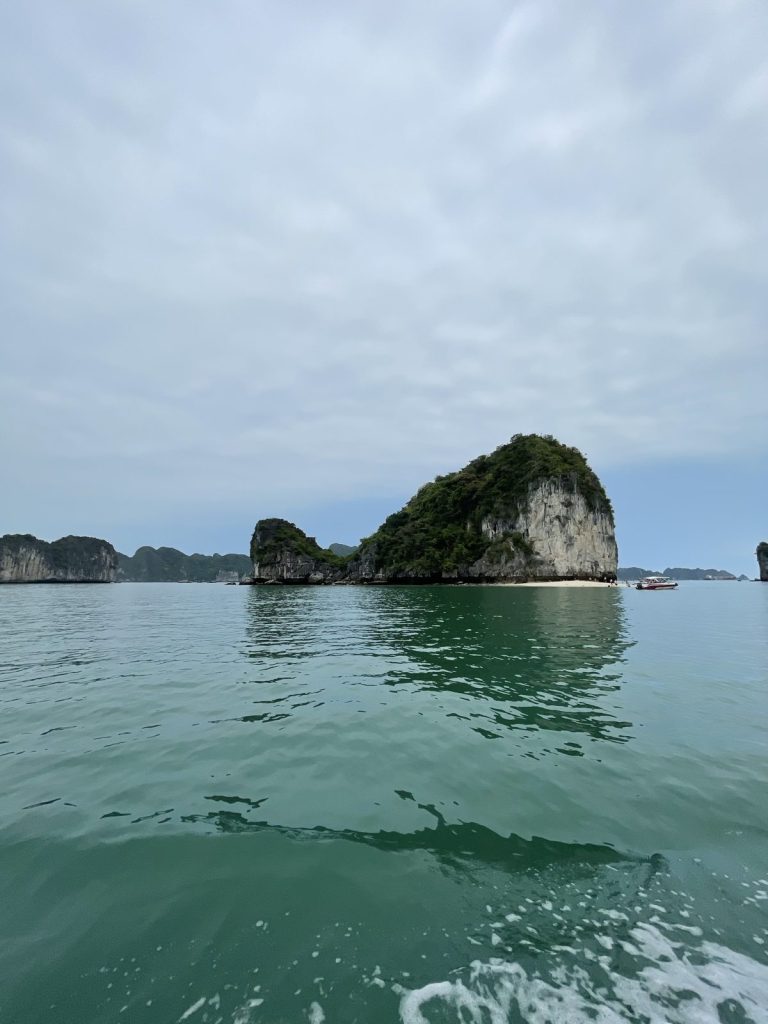
The macaques on Monkey Island are wild animals that have learned people carry food: they will grab a bag, snatch a drink and bite if cornered, but nobody needs to skip the island and nobody should feed them. Monkey Island (Cat Dua) is a short boat ride from Ben Beo and many day boats from Cat Ba town call there. This page is the honest version of what the monkeys do, how to keep your hands and bags, what to do if one bites, and whether the island is worth the stop at all.
Monkey Island at a glance
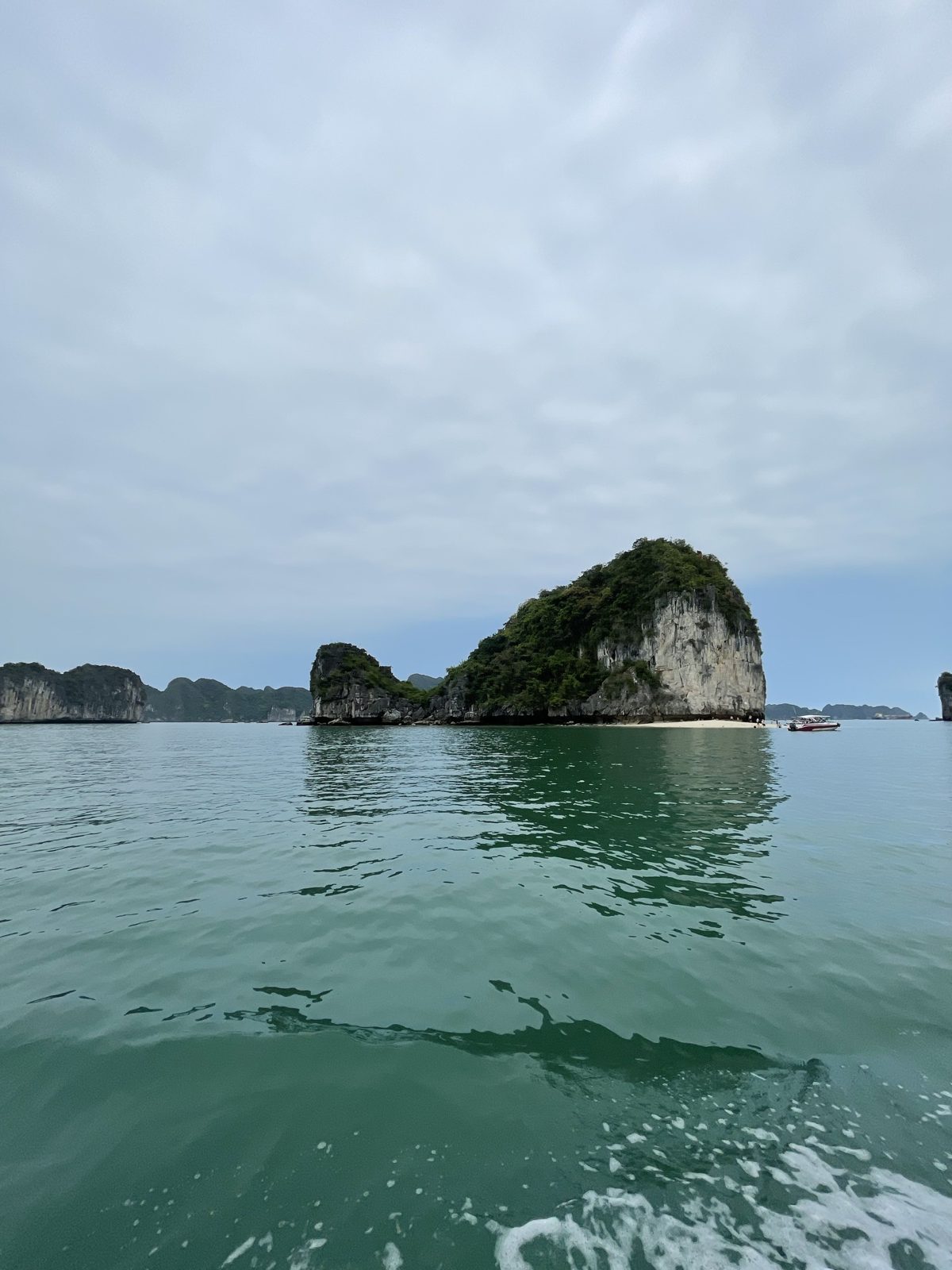
| Where | Cat Dua island in Lan Ha Bay, a short boat ride from Ben Beo harbour; a sand beach with a bar, and a steep rocky path to a viewpoint |
| The monkeys | Rhesus macaques, wild but habituated; they live near the beach and bar because that is where the food is |
| Danger level | Low if you keep food out of sight and keep your distance; real if you feed them, tease them, or hold on to something they want |
| Bites | Do happen, almost always to someone feeding or filming at arm’s length; any bite or scratch needs washing and a doctor the same day (rabies risk is real in Vietnam) |
| Cost | Included in many day tours from Cat Ba town; Lan Ha Bay ticket 120,000 VND adults, 60,000 VND children; drinks at the bar are paid |
| Worth it? | As a 30–45 minute stop with a swim, yes; the viewpoint climb is good if your shoes are; as a destination on its own, no |
| Our tours | Not on our full-day boat’s usual route (caves, Ba Trai Dao beach, lunch on board); our half-day kayak on the Viet Hai side has no monkeys and no bar |
What actually happens on the beach
The boat drops you on a strip of sand with a bar at the back and jungle behind it. Before long a monkey appears on the bar roof, then another on the path, then a family at the edge of the trees. They watch bags. A bag of crisps opened on the sand, a banana in a hand, a water bottle on a towel: that is what they are there for. The brave ones walk up and take it; the clever ones wait until you turn to take a photo. People get scratched when they pull a bag back, and bitten when they try to hand-feed and the monkey takes the hand with the food. Nobody gets attacked for standing on the beach with their food zipped away.
The macaques are wild and nobody manages them. There is no keeper and no fence. They are also far less of a problem than the stories suggest, as long as you arrive knowing the rules below. The visitors who have a bad time are usually the ones who arrive without having been told.
The rules, and why
| Do / don’t | Why | If it goes wrong |
|---|---|---|
| Keep all food, drinks and anything that rustles inside a zipped bag, and keep the bag on your body or on the boat | The monkeys are after food, not you; no visible food means no interest | If a monkey has the bag, let it go. Nothing in it is worth a bite |
| Never feed them, never hold food out, never tease or pose with one | Feeding is what taught them to grab; a hand with food in it is a hand that gets bitten | Back away slowly, do not run, do not stare it down |
| Keep children beside an adult and off the path when monkeys are on it; no eye contact, no shrieking, no chasing | Children are at monkey height and move fast, which the troop reads as a threat | Pick the child up and walk away calmly |
| Keep a few metres’ distance and give the troop the path if they are on it | A cornered macaque bites; one with space just leaves | Step off the path and wait a minute |
| Do not let anyone throw things at them | Provokes the whole troop, not one animal | Get back to the boat |
| Wear shoes with grip if you climb to the viewpoint | The path is rock, roots and a short scramble; the monkeys are not the main risk up there, the rock is | Turn back if it is wet |
If someone is bitten or scratched
Wash the wound immediately with soap and running water for a full fifteen minutes, then rinse with bottled water or an antiseptic if there is one. Then go to a doctor the same day, not the next: Vietnam has rabies in wild and stray animals, and any bite or scratch that breaks the skin from a macaque is treated as a possible exposure, which means post-exposure vaccination started quickly. The nearest hospital is in Cat Ba town: from Monkey Island the boat goes back to Ben Beo and a taxi takes you into town. Ask whether they can start rabies vaccination that day; if not, go on to a larger hospital in Hai Phong. Tell the crew at once, and if you are staying with us, call us and we help you get there. Do not wait to see if it “looks fine”, and do not let anyone talk you out of the doctor because the animal “looked healthy”. The vaccination is a series of injections over a couple of weeks, so check what your travel insurance covers, and the first one on the day of the bite is the one that matters.
Almost every bite involves food in a hand. It is avoidable.
Is Monkey Island worth it?
As a stop, yes, if the group wants a beach and a bar and a bit of theatre. The sand is fine, the water is swimmable in the warm months, and the viewpoint at the top of the rock gives a good view of the inner bay after a short, steep scramble. As a reason to choose a tour, no. Many town boats stop there, so it is busy from late morning, and the monkeys are the main event only because they have been fed for years. If your group is nervous about the monkeys, has small children, or wants quiet water, our full-day boat from Viet Hai goes to the caves and Ba Trai Dao beach instead, and the half-day kayak stays away from it entirely. Our guide to the bay’s sights ranks the island alongside the rest, and the beaches guide covers the other sand.
The other monkeys: the ones you should look for
The macaques are the common monkey of the bay. The rare one is the Cat Ba langur, golden-headed, found nowhere else on earth, with fewer than a hundred animals left on cliffs around the island. You will not see one on Monkey Island, and you should not try to feed or approach one anywhere. Our page on where to see the Cat Ba langur explains the difference and the protected areas; the national park hiking guide covers the forest where the langurs’ neighbours live. Guests who want wildlife rather than a show usually get more from a quiet morning on the trek to Viet Hai or the Bat Cave and Frog Pond walk than from the beach bar.
Doing it from Viet Hai
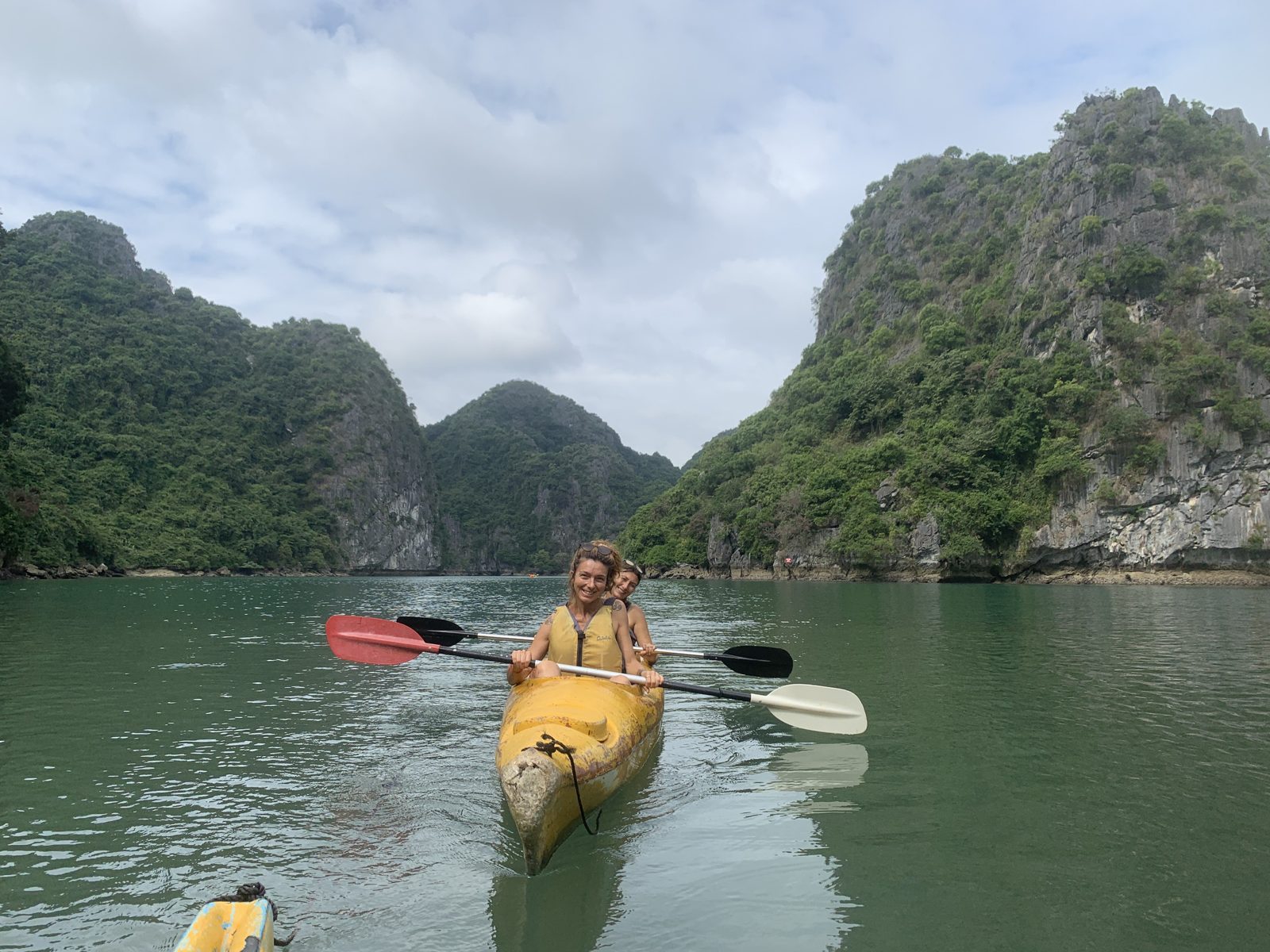
Our full-day Lan Ha Bay boat (it leaves Ben Beo at 9:00, and guests from Viet Hai join it at about 9:45 by small boat from the village pier) does not have Monkey Island on its usual route; it kayaks through the caves and stops at Ba Trai Dao beach. The half-day kayak trip stays on the Viet Hai side where there are no monkeys and no bar. If you are staying in town first, the island is on many day tours from Cat Ba town, and our boat safety guide covers what to check before you board. Families should read Cat Ba with kids first; a four-year-old and a troop of macaques is the combination that needs most watching. The rest of the island’s options are in things to do on Cat Ba.
How we handle Monkey Island
If Monkey Island is on your boat day with another operator, keep the rules: food zipped away, nothing in hands, children beside adults. If you are staying with us and anyone is scratched or bitten, call us and we help you get to the hospital in Cat Ba town the same day. Rates move with the season and the size of the group, so message us with your dates and we will reply with what is possible.
Questions about the monkeys on Monkey Island
Do the monkeys on Monkey Island bite?
They can, and bites do happen, almost always while someone is feeding one or pulling a bag back. With food zipped away and a few metres’ distance they usually ignore you. Never hand-feed, never pose with one, never let a child approach one.
Is there rabies risk on Monkey Island?
Yes. Rabies exists in Vietnam and any macaque bite or scratch that breaks the skin is treated as a possible exposure. Wash with soap and running water for fifteen minutes and get to the hospital in Cat Ba town the same day for post-exposure vaccination.
Is Monkey Island worth visiting?
As a 30–45 minute stop with a swim and a viewpoint climb, yes. As the reason to pick a tour, no: it is busy from late morning and the monkeys are a show created by years of feeding. Groups who want quiet water do better around the floating platforms on the Viet Hai side.
Can I see the Cat Ba langur on Monkey Island?
No. The golden-headed langur lives on protected cliffs elsewhere around Cat Ba and is one of the rarest primates in the world. The monkeys on the beach are rhesus macaques.
Anything else, send us a message and we will answer from the village.
Read next
- Best attractions in Lan Ha Bay
- Where to see the Cat Ba langur
- Lan Ha Bay boat safety guide
- Cat Ba island with kids
