
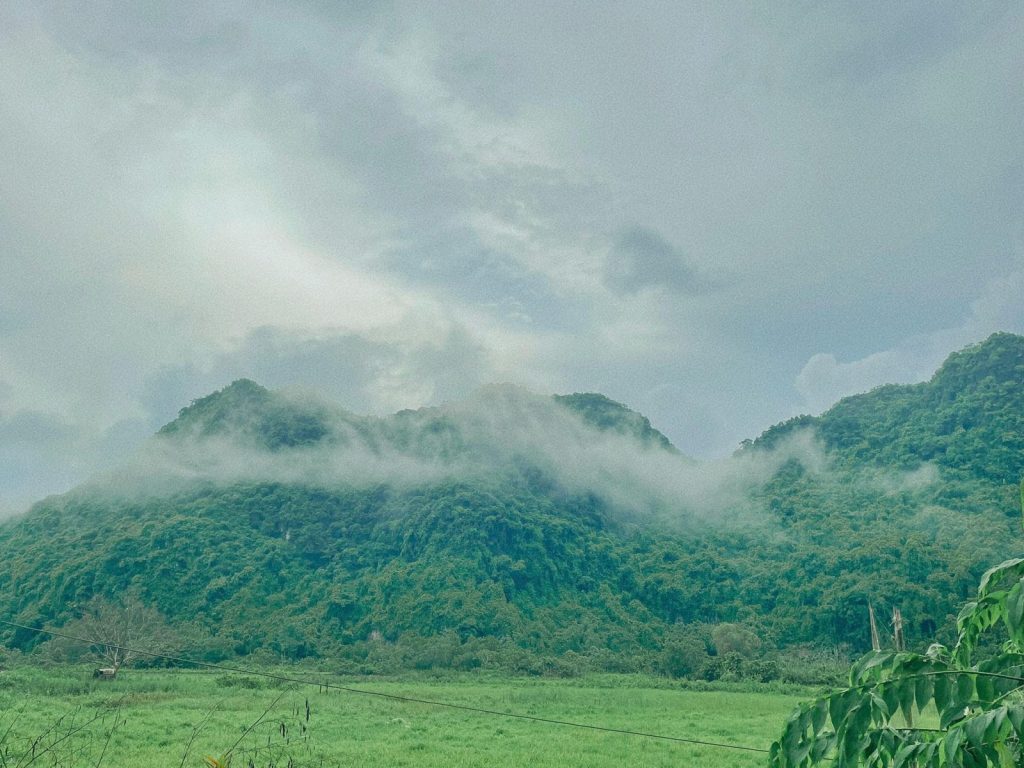
The thing nobody tells you about a village no road reaches is how loud it is. Not with engines — with frogs, insects, roosters that have no respect for sunrise, a dog somewhere, buffalo moving in the dark. Viet Hai has about 87 households, no road in, no street lighting and no bar strip. The first night is often the strangest night of someone’s Vietnam trip, and by the second most people have stopped wanting to leave.
What happens after dark in a car-free village?
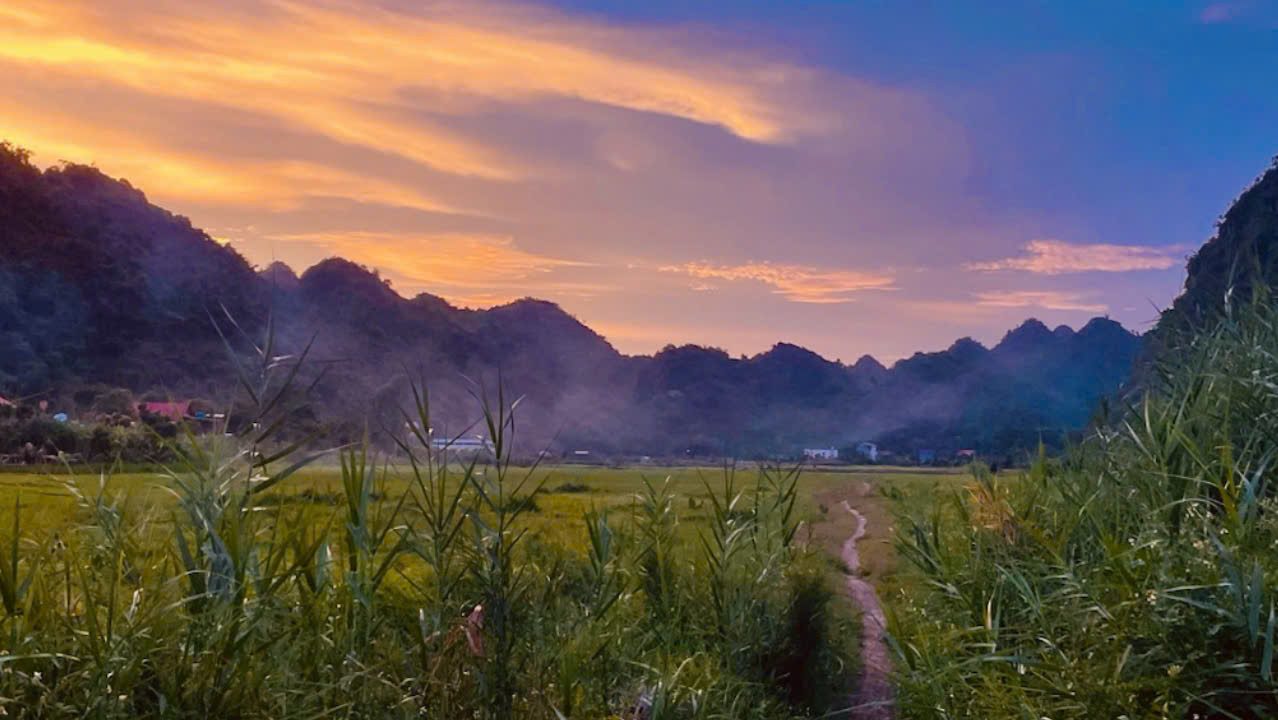
The day boats leave around four in the afternoon and the valley empties. Between five and six the light goes gold and then pink over the fields, which is the hour every photograph you have seen of this place was taken in. Dinner is at 18:30 at one long table. By nine most people are outside looking at the sky, because there is no street lighting anywhere in the valley and on a clear night that is a lot of stars.
By ten it is quiet in the human sense and extremely loud in every other sense.
What is there not in Viet Hai village?
- No bars, no clubs, no night market
- No shops open past early evening
- No ATM, in any hour
- No street lights — bring a phone torch for the lane
- Weak mobile signal; Wi-Fi works in the rooms and common areas
If that list reads as a problem, Cat Ba town is an hour and a boat away and has all of it. If it reads as the point, keep reading.
What is the one thing to do at night in Viet Hai?
On the darkest nights of the lunar month the plankton in the bay glows when the water is disturbed. Paddle out and every stroke lights up blue. It needs a new moon, warm water and calm conditions all at once, so it is a matter of dates rather than desire — full detail in our bioluminescent kayaking guide.
Outside that window, the answer is the sky. No light pollution for kilometres.
What is it like to sleep in Viet Hai village?
Rooms have air conditioning, hot water and thick blankets for winter. What they do not have is soundproofing against a valley, and that is not a fault to be fixed. If you are a light sleeper, bring earplugs — genuinely, this is the most useful thing in your bag here. The roosters start before five.
What is the morning like in a car-free village?
Mist sits low over the fields until about seven and then lifts in ten minutes. Buffalo get moved. Someone cycles past. If you were awake for the roosters anyway, get up and go outside — the valley between six and seven is the best hour of the day and almost nobody sees it because they are catching up on sleep.
What are the houses in Viet Hai made of?
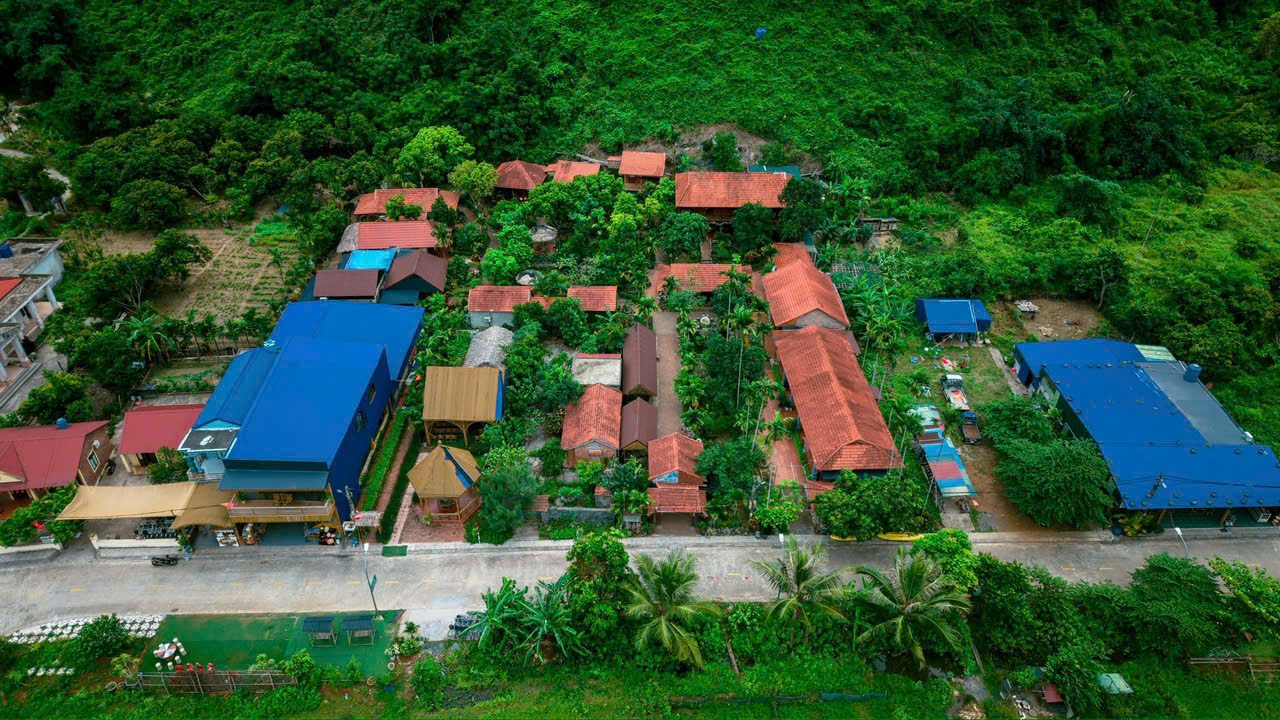
For most of this village’s life, houses here were built from whatever grew in the valley: mud, thatch grass, bamboo, timber, reed, straw. That was not a style choice. A village with no road in cannot have brick and cement carried to it, so people built with what was within walking distance of the door.
A very small number of better-off households could afford stone, good timber and roof tiles — and that was the visible marker of doing well, not a regional aesthetic. As money came into the valley, most of those older houses were replaced with brick and cement.
You can read the village’s economic history off its walls, which is more honest than any figure we could quote you. And it runs on the same clock as the other date worth knowing: the national grid only reached Viet Hai on 16 August 2009. Plenty of the people running homestays here now grew up in this valley by oil lamp.
The village is younger than the valley by about six thousand years
Viet Hai is often described as an ancient fishing village. It is neither. The commune’s own Party-branch history records the settlement being cleared around 1930, when two Chinese landowners and ten tenant farmers turned forest into rice fields at Tai Lai — which is the valley’s older name. The Chinese households left in 1947–48, leaving their houses and two plough buffalo behind; resistance-era families, evacuees and then twenty state-resettlement households from Trang Cat in 1963 filled the valley back up. The name “Viet Hai” itself is administrative, given in 1959.
The valley, though, is old. Caves in the commune — Ang Giua and Tien Duc — hold traces of people living here roughly 6,500 years ago, eating shellfish off the tidal flats and hunting in the forest; the shell layers are still thick inside. And in 1889, after a losing battle against the French, the insurgent leader Tien Duc withdrew into this valley. The cave still carries his name, and you can walk to it from the village.
Who does a night in a car-free village suit?
| You will love it if | You will not if |
|---|---|
| You want to be unreachable for a day or two | You need reliable connectivity at fixed hours |
| You are happy eating with strangers | You want a table for two and a menu |
| Nature noise is soothing to you | You need silence to sleep |
| You like a place with one road | You want options in the evening |
Frequently asked questions
Answered by the Lan family in Viet Hai — the people who run the boats, cook the dinner and pick you up at the pier.
Is one night enough?
One night gets you the evening and the morning, which are the two best parts. Two nights is when people relax properly.
Is it safe to walk around at night?
Yes. Bring a torch for the lane; the hazard is the ground, not people.
Will I be bored?
Possibly, on the second evening, and it is worth sitting with that for an hour before deciding it is a bad thing.
Are there mosquitoes?
In the wet months, yes. Rooms have nets or air conditioning; repellent handles the rest.
Can I get a drink?
Beer and soft drinks are self-service and go on your bill. It is not a dry village; it is a small one.
Curious whether it suits you?
Tell us what you are hoping for from a night here and we will tell you straight whether this is your kind of place. WhatsApp +84 363 934 325 or message us here.
