
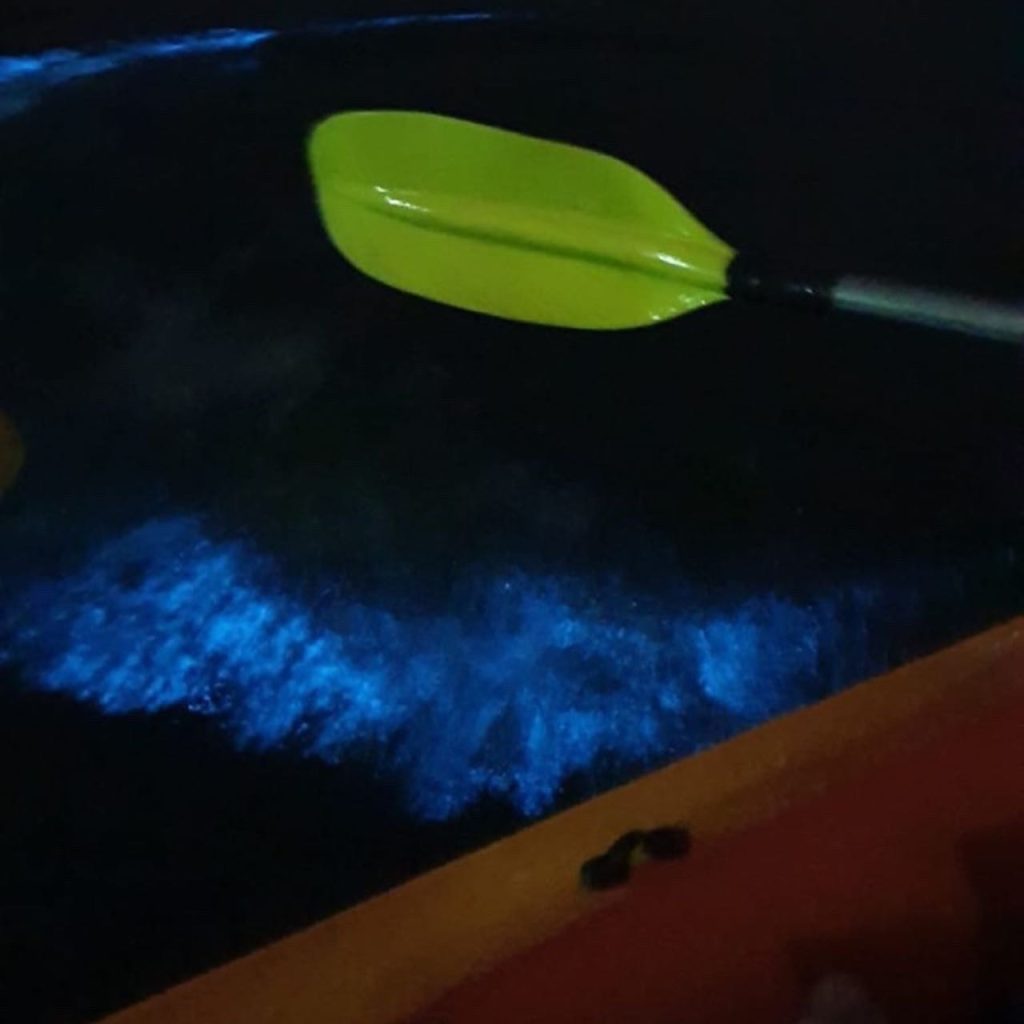
Bioluminescent plankton in Lan Ha Bay glows when the water is disturbed — every paddle stroke lights up blue, and so does your hand if you trail it. It needs three things at once: warm water, a dark night near the new moon, and calm conditions. Get all three and it is the strangest hour you will spend in Vietnam. Miss one and you paddle around in the dark. This guide is about maximising the odds and being honest about them.
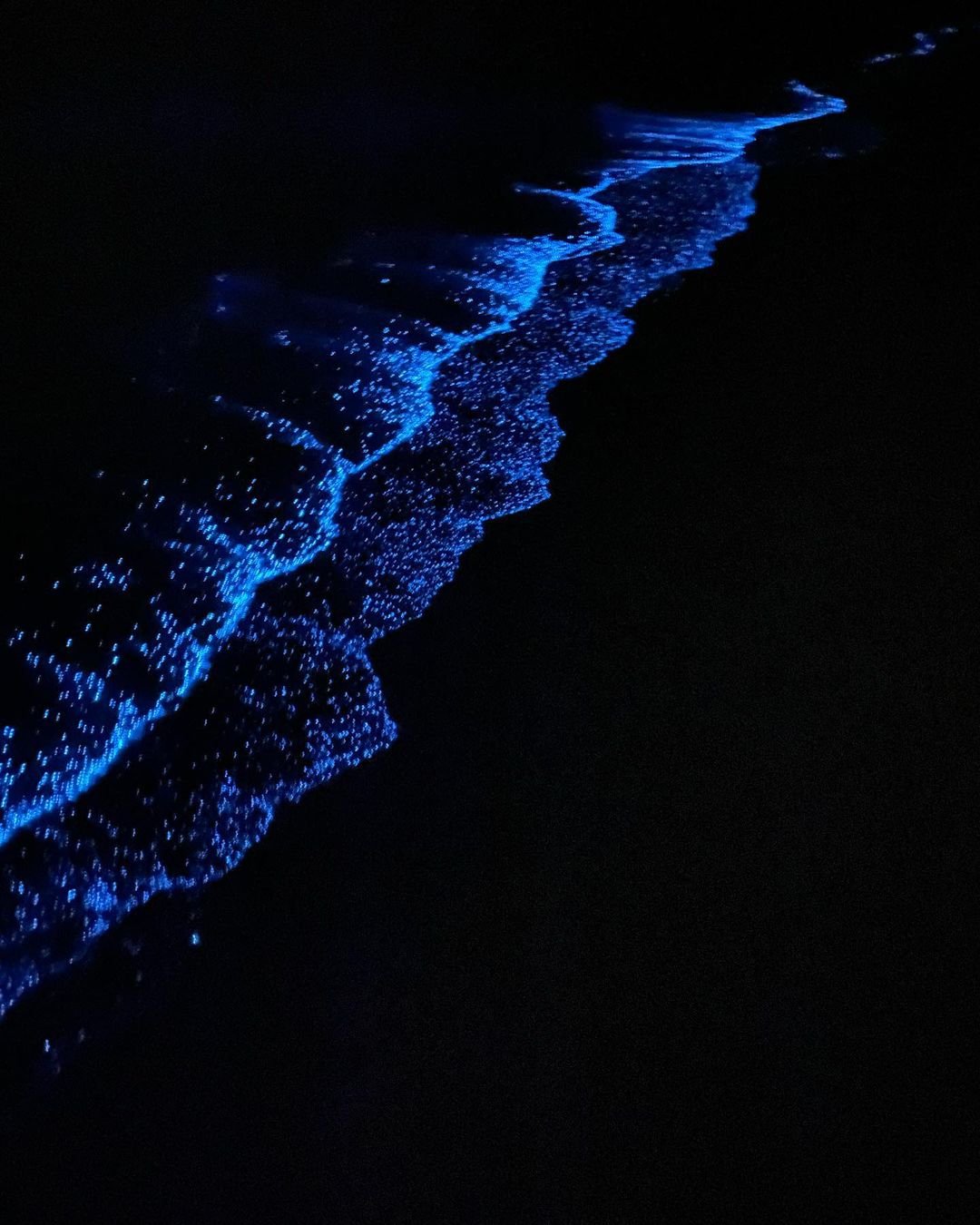
What is actually glowing?
Single-celled marine plankton — dinoflagellates — that produce light through a chemical reaction when the water around them moves. It is a defence response: a sudden flash startles whatever is trying to eat them. In a bay with warm, nutrient-rich, sheltered water like Lan Ha they can bloom in enormous numbers.
The light is blue-white, cold, and brief. It appears exactly where the water is disturbed and vanishes a second later. Photographs almost never do it justice; phone cameras in particular see very little of it.
The three conditions
| Condition | What you need | Why |
|---|---|---|
| Water temperature | Warmer water, broadly the summer half of the year | Local operators report weaker displays in the cold months |
| Moon phase | Within a few nights of the new moon | Moonlight washes the glow out completely |
| Sea state | Calm, no wind | Choppy water scatters it and makes paddling unpleasant |
Cloud cover helps rather than hurts — it blocks starlight and moonlight. A warm, overcast, still night three days after the new moon in July is close to perfect.
Getting here is the part most guests worry about. Tell us your arrival city and date and we will put the whole chain together — bus, boat and the cart from the pier — and meet you at Viet Hai. See how the transfer works, or just send us the dates.
When to plan it
The one thing everybody agrees on is the moon. Aim for the three or four nights either side of a new moon, on calm water. Beyond that, local operators disagree about the best months — some report March-April and October-November as the strongest, others June-October. There is no scientific survey of this bay to settle it, so we will not pretend there is: tell us your dates and we will tell you what we have actually been seeing that week.
This is the single most date-dependent thing we run. If seeing it matters to you, pick your travel dates around the lunar calendar rather than the other way round. Send us the dates you are considering and we will tell you which nights fall near the new moon and whether the water is usually calm that time of year.
What the trip is like
Ours runs as an extension of the sunset tour: out on the bay in the late afternoon, dinner on the boat as the light goes, then into kayaks once it is properly dark. You paddle in a group, with a guide, in sheltered water.
The first minute is disorientating — you cannot see the water, only shapes of limestone against the sky. Then someone dips a paddle and the whole thing makes sense.
You can also do it as a night paddle from the village without the full sunset trip. That is a shorter, simpler version and suits people already staying in Viet Hai. Rates for both move with the season and group size, so ask us for the current one rather than trusting a number you read somewhere.
Practical rules
- No sunscreen or insect repellent on your hands and arms before you go. The chemicals harm the plankton and you will be trailing your hands in the water constantly.
- Life jacket on, always. You cannot see the water. This is not the trip to be casual about it.
- Stay with the group. Distances are impossible to judge in the dark.
- Turn the headlamps off. One light ruins it for everyone; your eyes need fifteen minutes to adjust.
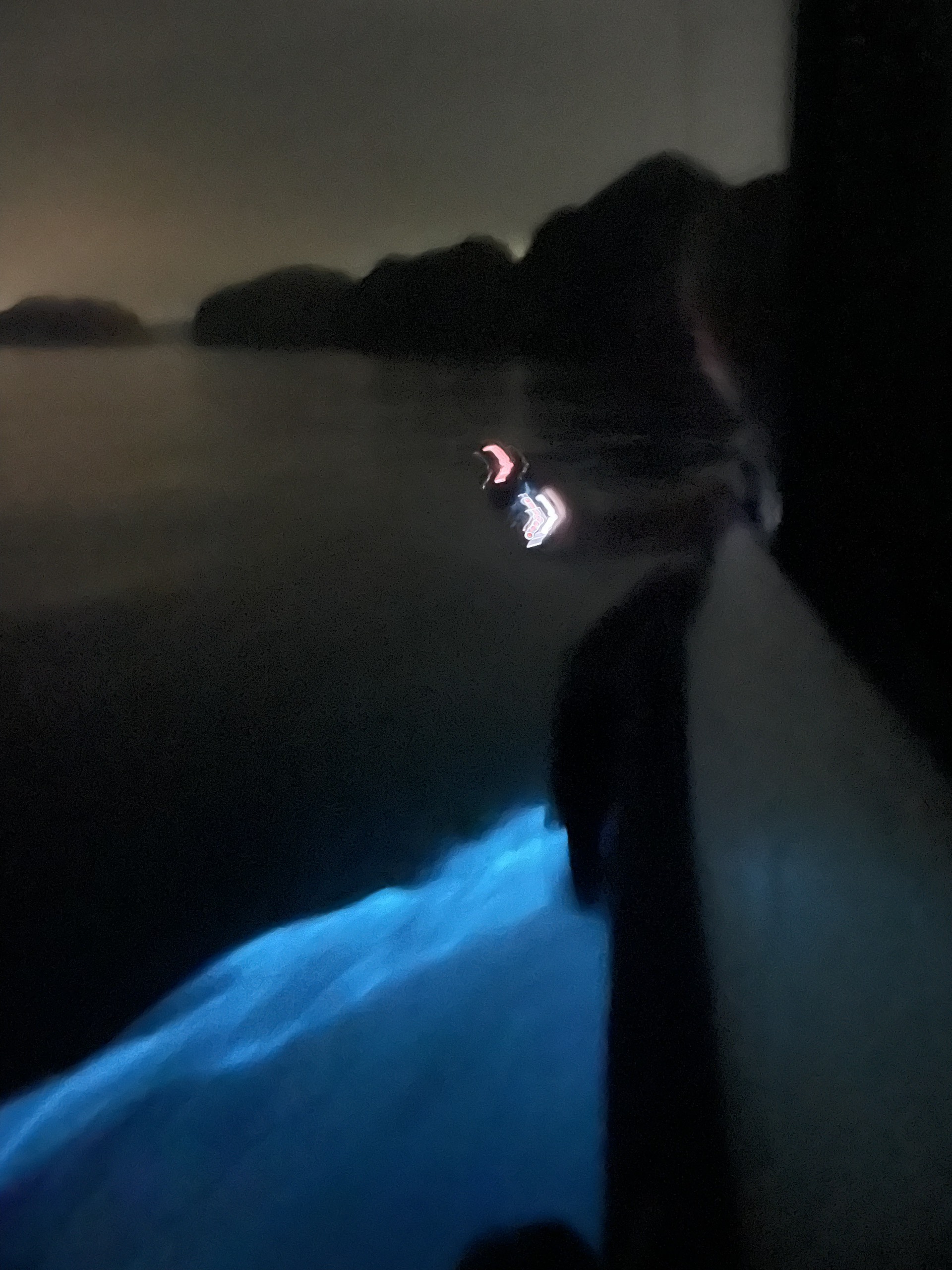
- Leave the phone in a dry bag. You will not get a usable photo and you will drop it.
- Wear something you do not mind soaking. Warm water, no problem, but you will be wet.
Managing expectations, honestly
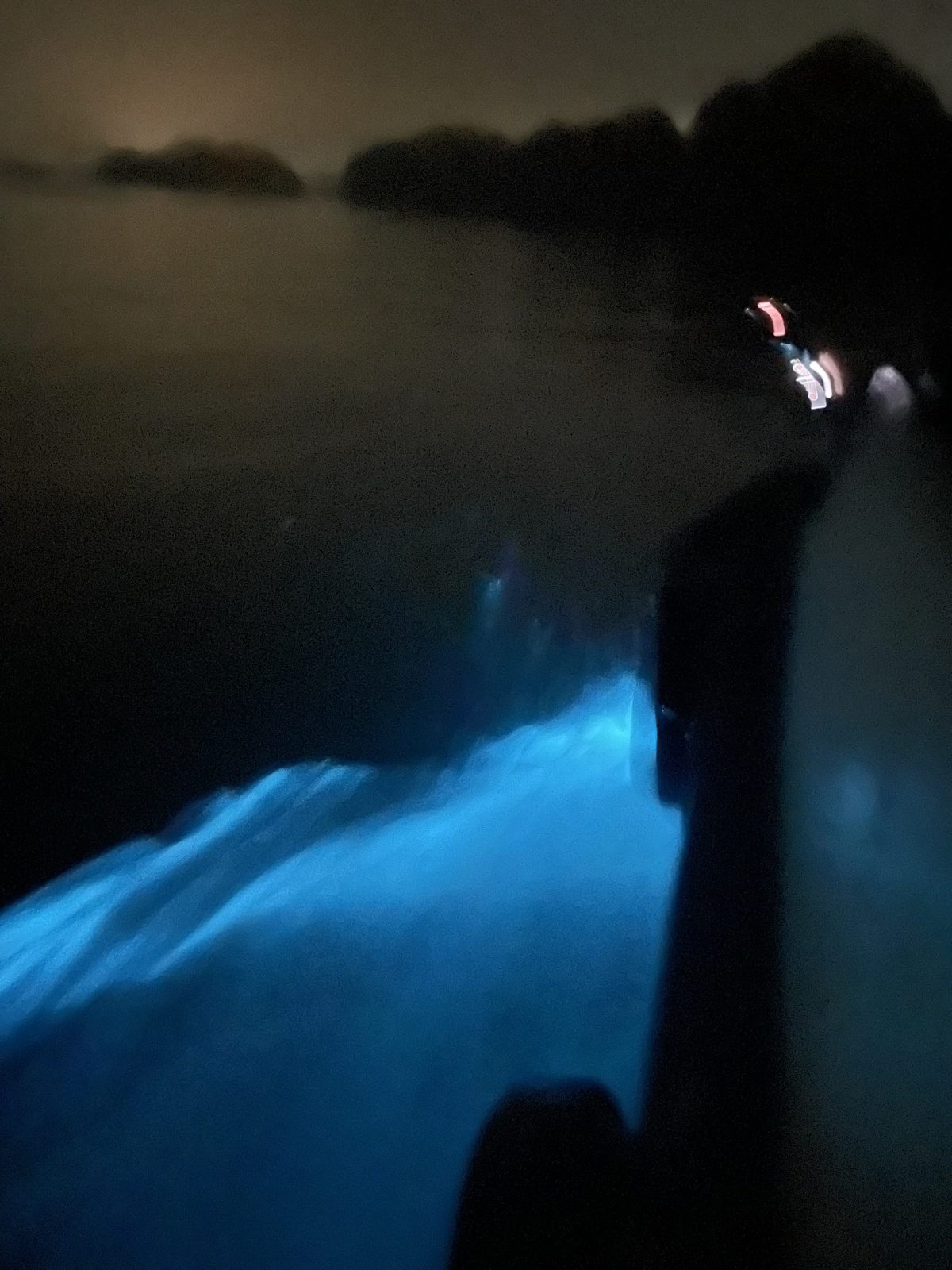
Some nights it is spectacular — every stroke a burst of blue, fish leaving glowing trails under the boat. Some nights it is faint, a suggestion of light rather than the thing itself. And on maybe one night in five in the right season, there is essentially nothing.
Nobody can promise it, and you should be wary of anyone who does. What we can do is tell you honestly, on the day, whether the conditions look right — and suggest moving it to the next night if they do not.
Frequently asked questions
Answered by the Lan family in Viet Hai — the people who run the boats, cook the dinner and pick you up at the pier.
Can I see it from the shore?
Occasionally, in the wash at the water’s edge on a very dark night. But the effect needs disturbance, which is why kayaking works so well.
Is it safe to swim in?
The plankton is harmless. Swimming at night in open water is a different question, and we do not recommend it.
Can children do it?
Yes, in a double kayak with an adult, from around eight years old and with a life jacket that fits properly. Younger than that, they tend to be asleep by launch time anyway. See Cat Ba with kids.
Do I need to be able to kayak?
No. Our beginner’s guide covers the basics, and the night paddle is short and slow.
What if the weather turns?
It gets cancelled. Boats do not go out in wind, and a night paddle in swell is not something anyone should be doing.
Want to know if your dates work?
Send us the nights you will be here and we will check them against the moon and tell you which one to aim for — or tell you straight that this trip is not going to happen that week. WhatsApp +84 363 934 325 or message us here.
Read next
- Kayaking in Lan Ha Bay: a beginner’s guide
- One day in Viet Hai Village
- Best time to visit Cat Ba, month by month
Where to stay in Viet Hai
If this trip brings you into the village, the rooms and bungalows at Lan Homestay are a few minutes on foot from the centre: the garden bungalow (triple) works well for families, and the mountain-view double room for couples.
