
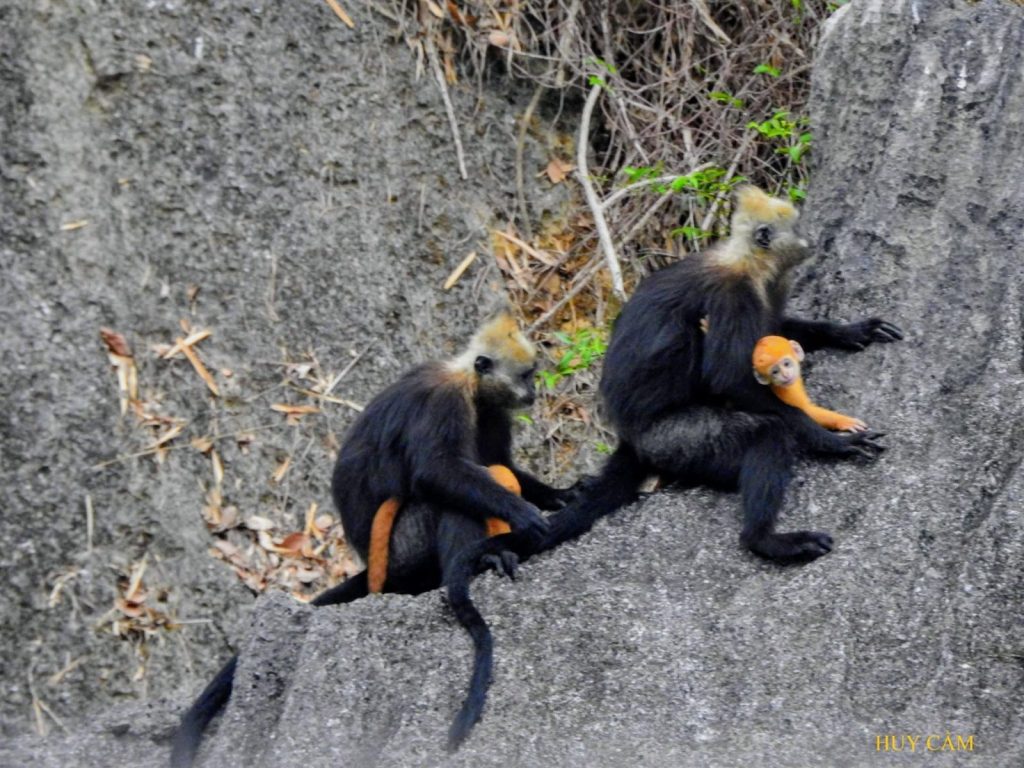
Just over 90 Cat Ba langurs are left, all of them on this island, and none of them anywhere else on earth. That makes them one of the rarest primates in the world. You are very unlikely to see one, and the honest advice is to come here for the island and treat a sighting as a lottery win. But knowing where they live, why there are so few, and how not to make things worse is worth ten minutes of anyone’s trip.
What is a Cat Ba langur?
A golden-headed langur — black-bodied, with a bright yellow-orange head and shoulders, and a long tail. Babies are born bright orange and darken as they grow. They live on limestone cliffs, sleep in caves and ledges above the water, and eat leaves. They are endemic to Cat Ba Island: the entire world population lives here, in a handful of separate groups.
There were close to 3,000 in the 1960s. Hunting cut the population to roughly 40 animals by the early 2000s. Protection and a long-running conservation programme brought it back to more than 90 by late 2024 — the highest count in about a century. That is real progress, and it is still a precarious number.
Where do they live?
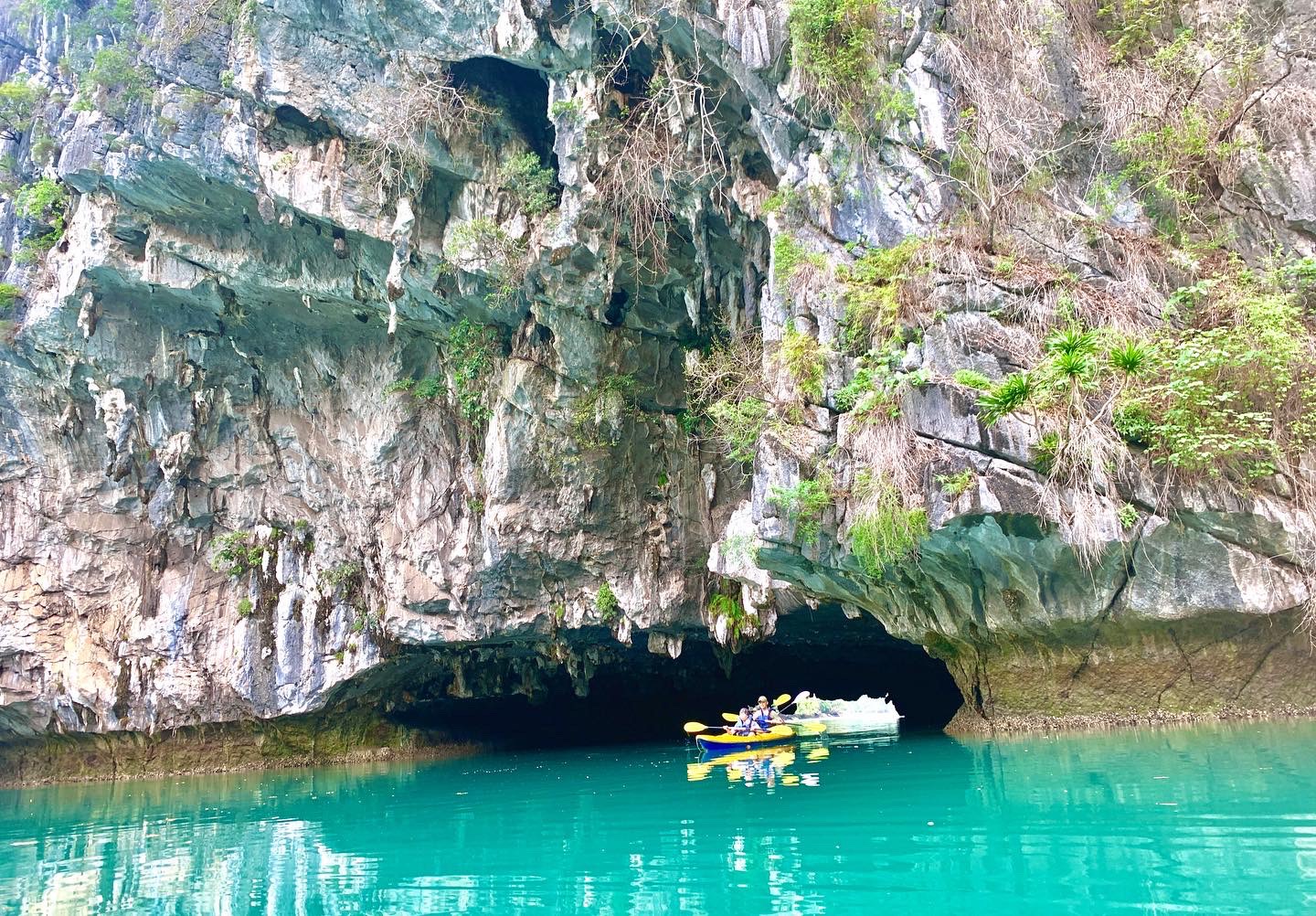
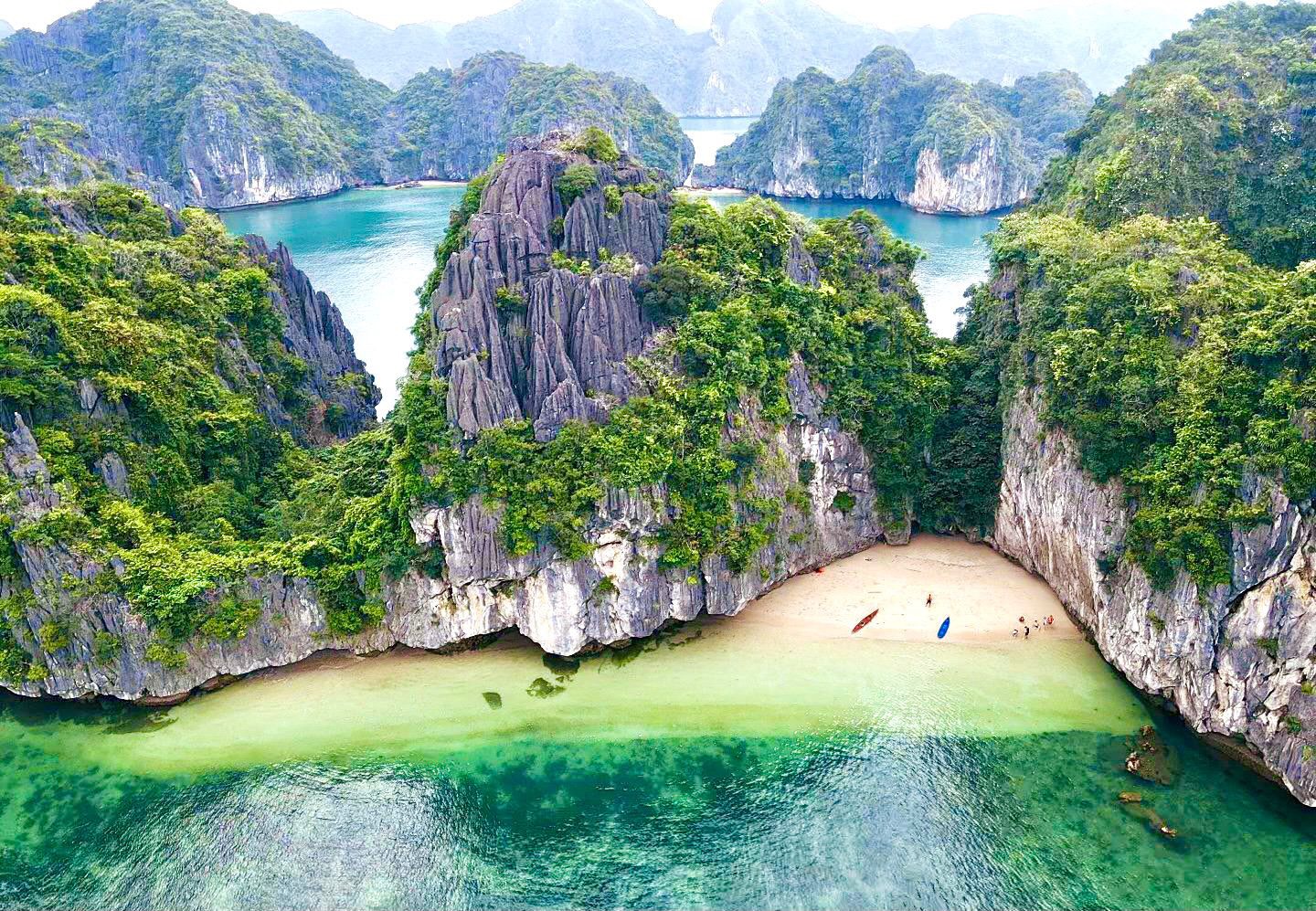
Not on the walking trails. This is the part most visitors get wrong. The langurs live on remote coastal cliffs in the northern and eastern parts of the archipelago — sheer limestone above water, reached by boat, not on the forest paths where people hike.
| Where | Chance of seeing one | Notes |
|---|---|---|
| Cat Ba National Park trails | Effectively zero | You will see macaques instead — different animal, grey-brown, unafraid |
| Cat Ba town and beaches | Zero | — |
| Standard bay day boats | Very low | Routes do not pass the core habitat |
| Remote northern cliffs by boat | Low but real | Early morning, calm water, patience, binoculars |
Getting here is the part most guests worry about. Tell us your arrival city and date and we will put the whole chain together — bus, boat and the cart from the pier — and meet you at Viet Hai. See how the transfer works, or just send us the dates.
The animals you will actually see
Macaques, and often. They are on the trails, on Monkey Island, and around anywhere food appears. They are not langurs, they are not endangered, and they are not tame — they will take a bag off your shoulder and they bite. Do not feed them, do not photograph them at arm’s length, and do not let children approach them.
You will also see civets if you are out at dusk, a great deal of birdlife, and geckos everywhere. Our national park guide covers the trails where the wildlife is.
How to behave if you do see a langur
- Stay in the boat and keep your distance. They abandon feeding sites that get disturbed, and there is very little habitat left to move to.
- No engine noise close in. Ask the captain to cut the motor and drift.
- No drones. This one matters. Drones near cliff colonies cause the animals to flee, and the fall risk for infants is real.
- No feeding, ever. Not langurs, not macaques.
- Report it. Sightings are useful data for the conservation programme. Tell us and we will pass it on.
Why the number stays low
Hunting is largely stopped, but three pressures remain: the groups are separated from each other, so breeding is limited; the habitat is being squeezed by development along the coast; and the archipelago now takes millions of visitors a year. The large reclamation and construction project on the Cat Ba coast has drawn criticism from conservation bodies for exactly this reason, and the island’s UNESCO World Heritage listing with Ha Long Bay has made the debate louder rather than quieter.
None of that is resolved. It is the honest backdrop to a trip here.
What visiting responsibly actually looks like
Not much of it is dramatic. Take your rubbish off the boat. Refuse single-use plastic where you can — the island is pushing towards a green transition and plastic in the bay is the visible failure of it. Choose smaller operators over bigger ones. Spend money in the villages rather than only on the strip. Stay somewhere that employs people who live here.
We are one of those, obviously, so weigh that as you like — but the principle stands whoever you book with. Viet Hai has no road in and no through traffic, which is less a lifestyle choice than a consequence of geography, and it is the quietest place on the island for exactly that reason.
Frequently asked questions
Answered by the Lan family in Viet Hai — the people who run the boats, cook the dinner and pick you up at the pier.
Can I book a langur-watching tour?
There is no reliable one, and be sceptical of anyone selling a guarantee. Some boat routes pass closer to habitat than others; that is the most anyone can offer honestly.
Are the monkeys on Monkey Island langurs?
No. Those are macaques, introduced, and they are aggressive around food.
Is it ethical to visit Cat Ba at all?
Tourism funds the park and gives the island an economic reason to protect what it has. The problem is scale and where the money goes, not visitors as such.
What should I bring if I want a chance of seeing one?
Binoculars, an early start, calm weather and low expectations.
Where can I learn more?
The Cat Ba Langur Conservation Project has run on the island since 2000 and its work is the reason the population recovered at all.
Coming to see the wild side of the island?
Tell us what you want to see and we will tell you what is realistic, which routes go where, and which months give the best water. WhatsApp +84 363 934 325 or message us here.
Read next
Population figures come from Cat Ba National Park and the Cat Ba Langur Conservation Project. The archipelago was added to the Ha Long Bay – Cat Ba Archipelago World Heritage site in 2023.
- The Cat Ba National Park hiking guide
- Trekking the national park to Viet Hai
- Things to do on Cat Ba Island
Where to stay in Viet Hai
If this trip brings you into the village, the rooms and bungalows at Lan Homestay are a few minutes on foot from the centre: the garden bungalow (triple) works well for families, and the mountain-view double room for couples.
