
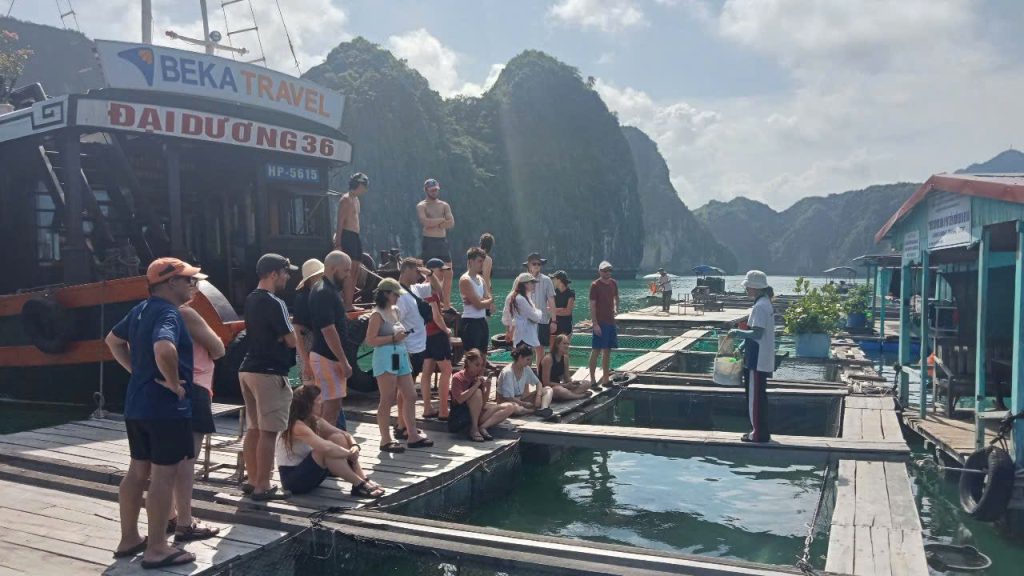
The floating fish farms of Lan Ha Bay are people’s homes, not an attraction. Families live on the pontoons year round, raising grouper and cobia in nets slung beneath the walkways. Almost every bay tour passes through one, and the difference between a visit that is welcome and one that is not comes down to about four things. Here is how to go, and how to behave when you get there.
What is a floating fish farm in Lan Ha Bay?
A grid of timber walkways floating on barrels or foam, with square net pens hanging below. Households live in small houses built onto the same structure. They raise fish to market size and sell to traders and restaurants. Cai Beo, just off Ben Beo Harbour, sits beside an archaeological site found by M. Colani in 1938 whose oldest layer is around 7,000 years old — people have been fishing this water for a very long time.
What it is not: a museum, a resort, or a place built for visitors. The walkways are working surfaces, often wet, sometimes with gaps.
How have Lan Ha Bay fish farms changed?
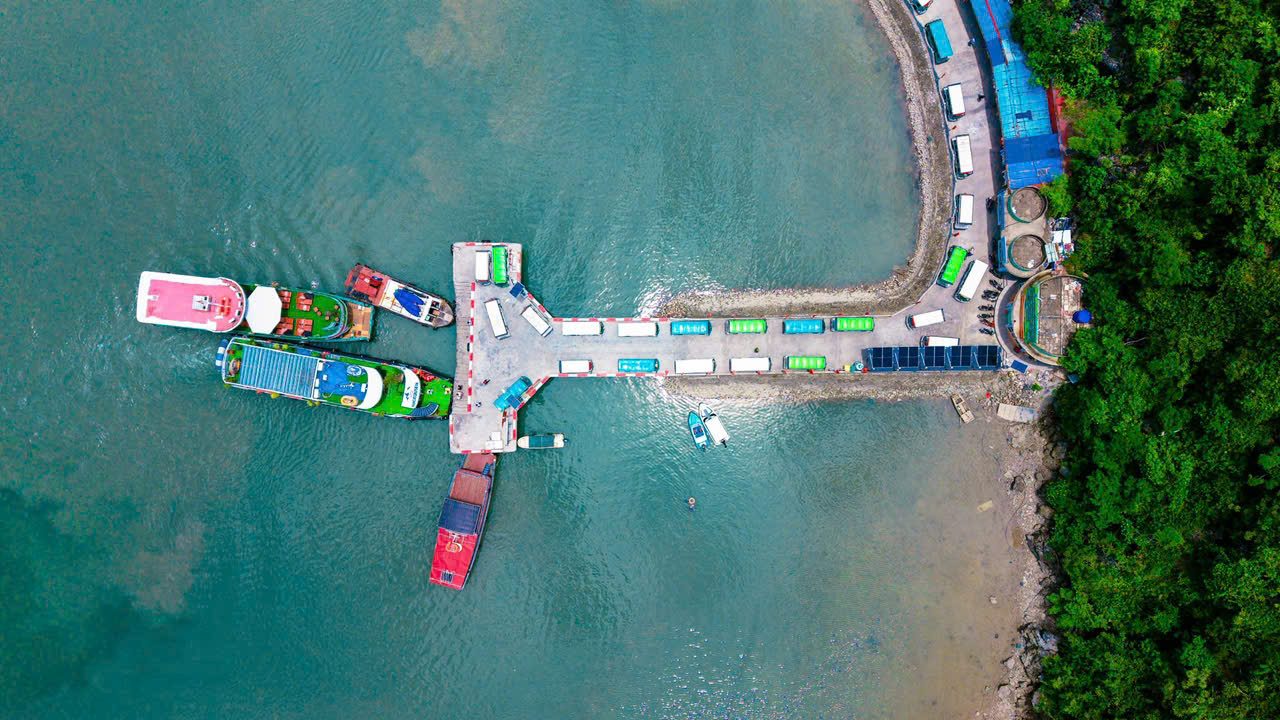
The number of farms has fallen sharply. Hai Phong cleared and consolidated aquaculture across the Cat Ba bays to protect the marine environment and support the UNESCO listing: from around 440 facilities and more than 8,200 net pens down to roughly 130 facilities and about 2,080 pens, concentrated in two planned areas at Ben Beo and Gia Luan. Visiting is not neutral in that context, and money that reaches the households directly matters more than it used to.
Getting here is the part most guests worry about. Tell us your arrival city and date and we will put the whole chain together — bus, boat and the cart from the pier — and meet you at Viet Hai. See how the transfer works, or just send us the dates.
How should you behave visiting a floating fish farm?
- Ask before you photograph people. Structures and fish, fine. Someone’s kitchen, ask. This is the single most common complaint we hear from the families.
- Buy something. Fish, a drink, whatever is on offer. A boat that stops for twenty minutes and buys nothing is a cost to the household, not a benefit.
- Do not feed the fish unless invited. Feed rates are managed; a boat of tourists throwing food in is a problem, not a treat.
- Watch your footing and your children. The walkways move, they are slippery, and there is deep water under the gaps.
What can you see at a floating fish farm?
How the pens are graded by fish size. Where the freshwater comes from. The dogs, which live on the pontoons and are entirely unbothered by the water. How a household hauls a net by hand. The whole thing is a working system and it is far more interesting than the ten-minute photo stop most tours make of it.
Go early. Mornings are when the farms are actually working — feeding, sorting, loading for the traders.

How do you get to a floating fish farm in Lan Ha Bay?
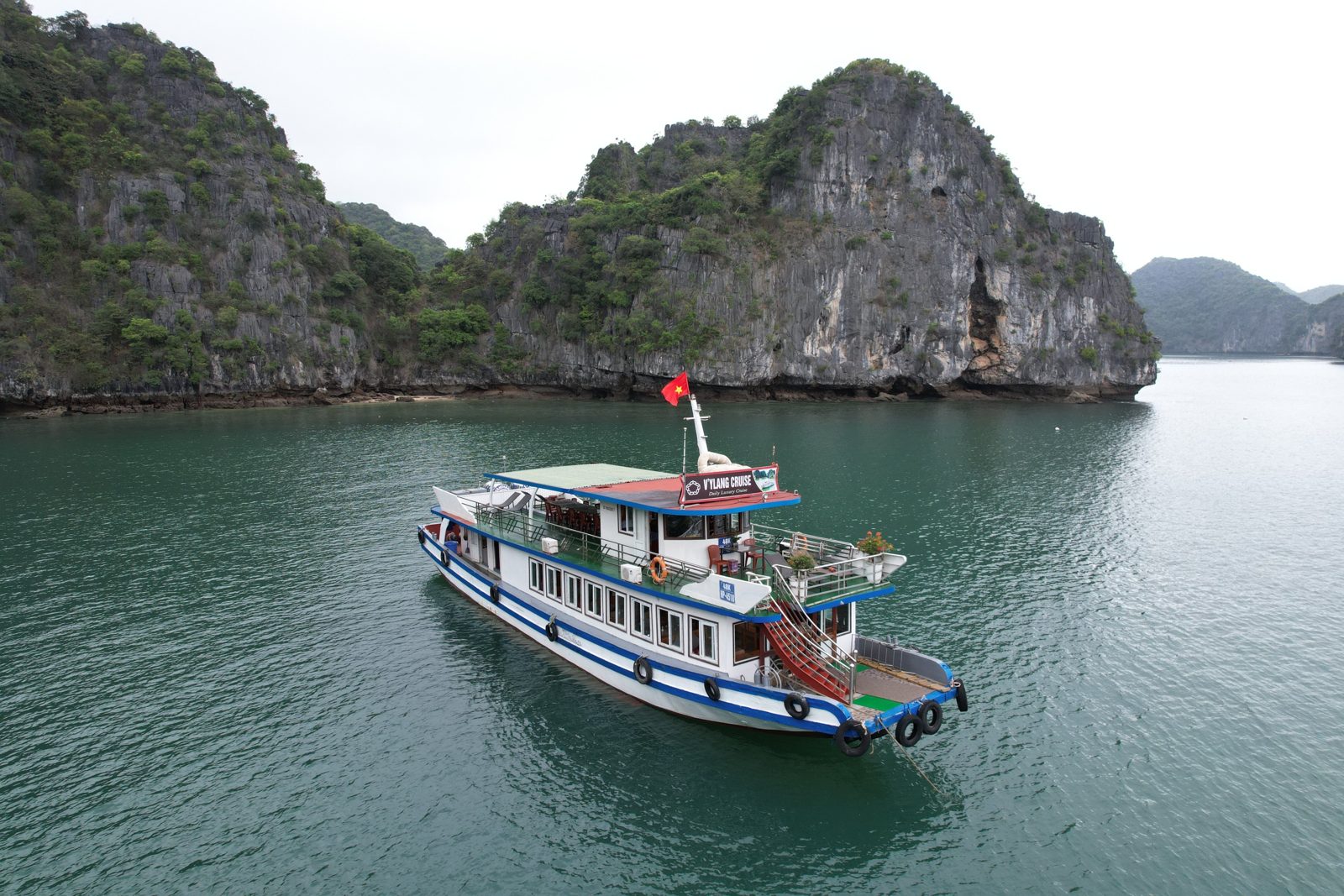
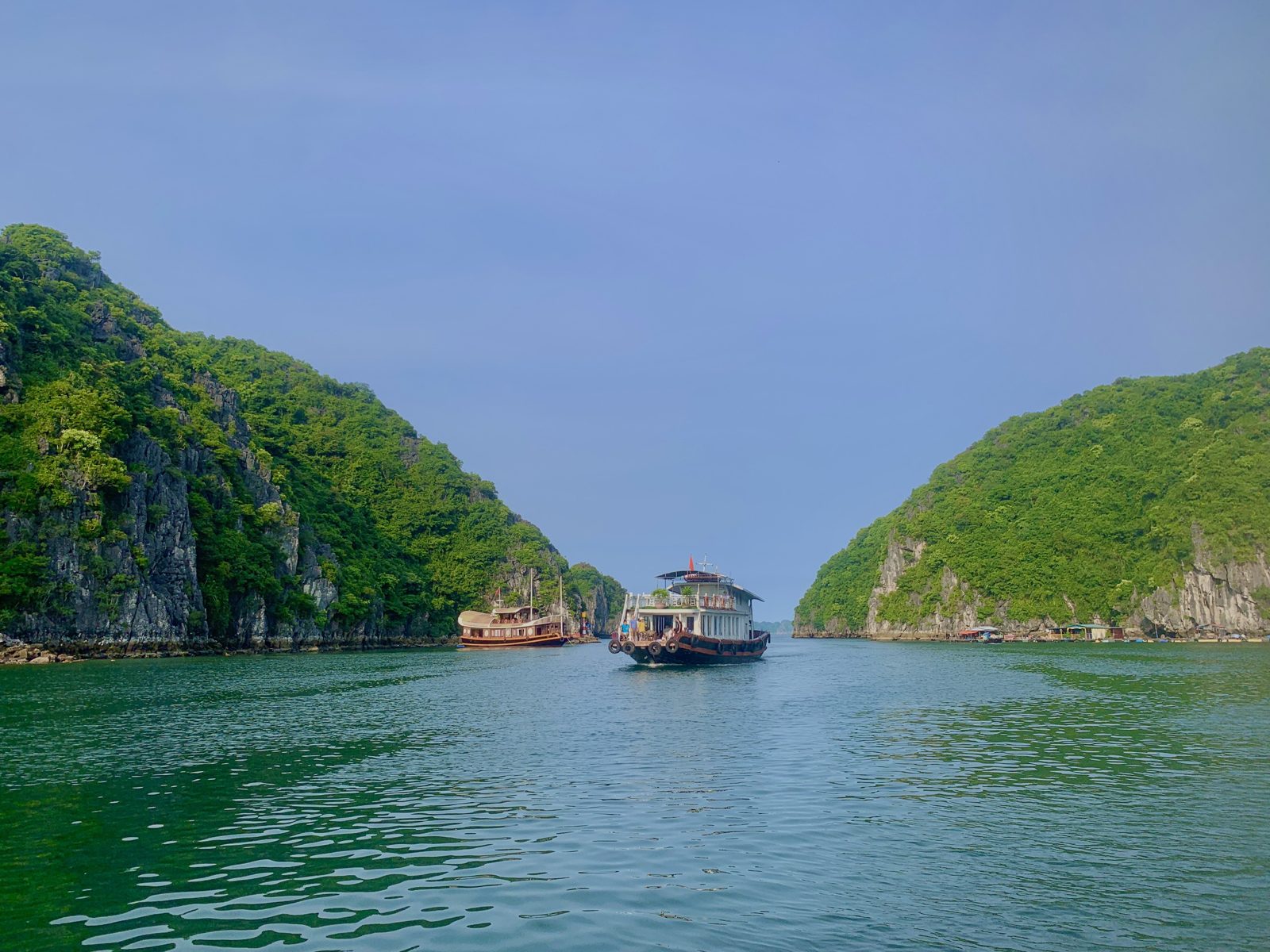
Cai Beo is a short hop from Ben Beo Harbour and is included in most bay itineraries. Farms further out in Lan Ha are quieter and are usually reached on a longer boat day — our full-day Lan Ha Bay trip passes them. Rates move with the season and group size, so ask us for the current one rather than a number you read somewhere.
The standard Lan Ha Bay entrance ticket, 120,000 VND per person applies to any boat going out.
Can you eat fish at a floating fish farm?
Some households sell and cook fish for visitors, and it is as fresh as it gets. If you would rather eat back on land, seafood at our table comes from the same water — hotpot and BBQ need a day’s notice because the ingredients come across by boat.
Frequently asked questions
Answered by the Lan family in Viet Hai — the people who run the boats, cook the dinner and pick you up at the pier.
Is it ethical to visit?
Visiting respectfully and spending money there is better for these households than staying away. Treating homes as a photo backdrop is not.
Can I stay overnight on a fish farm?
Some households have offered this informally. It is not regulated and we would not arrange it.
Is it safe for children?
With a life jacket and a hand held, yes. The gaps in the walkways are the hazard, not the water itself.
Will anyone speak English?
Rarely. Bring a guide or a phrasebook, and smile more than you talk.
Can I buy fish to take away?
Yes, by the kilo. Ask the price first — see our guide to overcharging.
Want to see it properly rather than from the rail?
Tell us your dates and we will put a farm on the route at a time of day when it is actually working. WhatsApp +84 363 934 325 or message us here.
Read next
- Ben Beo Harbour: the Cat Ba pier guide
- Best attractions in Lan Ha Bay
- What to eat in Viet Hai Village
Where to stay in Viet Hai
If this trip brings you into the village, the rooms and bungalows at Lan Homestay are a few minutes on foot from the centre: the garden bungalow (triple) works well for families, and the mountain-view double room for couples.
