
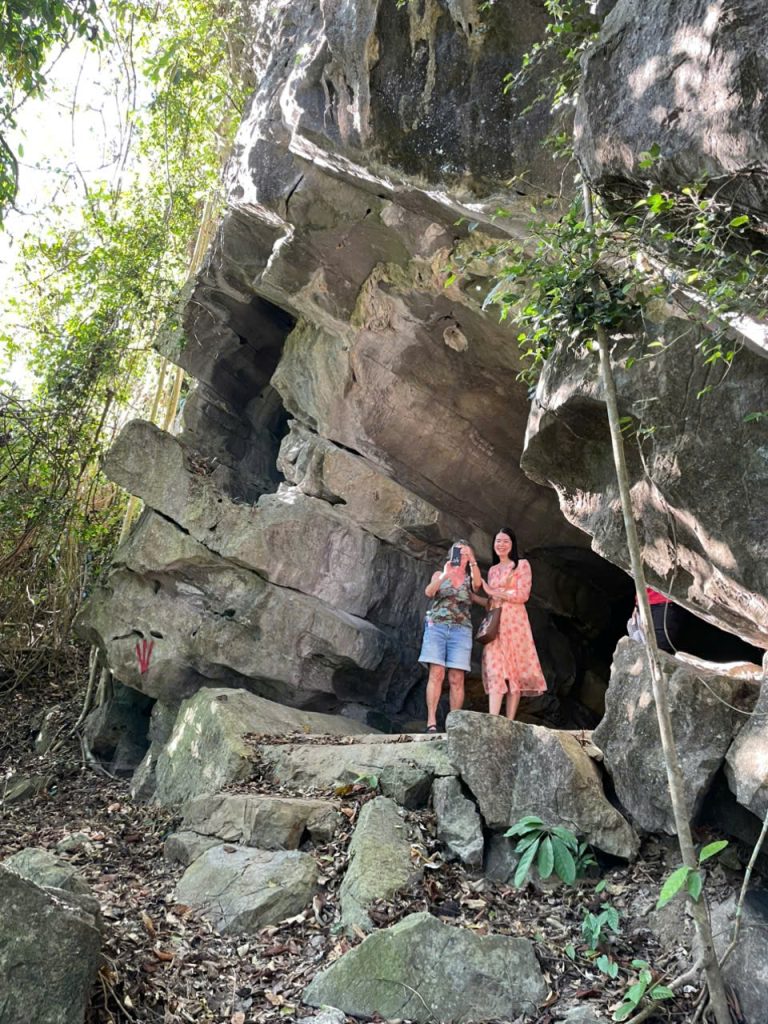
Cat Ba National Park covers more than 17,360 hectares of forest and sea, and its walks range from a 1 hour 45 minute climb to Ngu Lam peak (220 m) to a 9–12 km, 4–5 hour trek across the island to Viet Hai village. Entry is charged by route, from 80,000 to 160,000 VND, and the fees are fixed by the city. This guide covers each route, what it costs, and what you can realistically expect to see; we live on the far side of the park, so the long trail ends at our door.
| Founded | 1986; Biosphere Reserve since 2 December 2004; part of the Ha Long Bay–Cat Ba Archipelago World Heritage site since 16 September 2023 |
| Size | Over 17,360 ha — about 10,480 ha of land and 6,880 ha of sea; roughly 1,045 ha of primary forest |
| Wildlife | 1,595 plant species; 63 mammals, 209 birds, 58 reptiles, 27 amphibians; more than 90 Cat Ba langurs (late 2024) |
| Short walk | Kim Giao forest to Ngu Lam peak, 220 m, about 1 h 45 min return |
| Long walk | Park headquarters to Viet Hai village, 9–12 km, 4–5 hours, guide advised |
| Fees | Main gate 160,000 VND adult / 80,000 child; Kim Giao–Ngu Lam–Trung Trang 120,000; Ninh Tiep–Tien Duc and Phu Long mangrove 80,000 |
| Best months | October–November and March–April; winter is cool and good for walking, summer hot and stormy |
Which route in Cat Ba National Park should I walk?
The park sells tickets on four routes; add the guided climb to Navy Peak from the village and you have five real walks, very different in effort. Children pay half on every ticketed route, and there is no separate “entry from Viet Hai” price, whatever a boat operator tells you.
| Route | Starts at | Distance and time | Fee (adult / child) | Effort |
|---|---|---|---|---|
| Kim Giao forest – Ngu Lam peak (220 m) | Park headquarters | About 2 km return, 1 h 45 min | 120,000 / 60,000 VND, includes Trung Trang cave | Moderate; steep, slippery when wet |
| Trung Trang cave | Near park headquarters | About 300 m through the hill | Included above | Easy |
| Trek across the park to Viet Hai | Park headquarters | 9–12 km one way, 4–5 hours | 160,000 / 80,000 VND (main gate) | Hard; guide advised |
| Ninh Tiep stream – Tien Duc cave | Viet Hai village | 45–60 min each way | 80,000 / 40,000 VND | Easy to moderate |
| Phu Long mangrove – Thien Long cave | Phu Long, north-west of the island | About 2 km by boat up the creek, then a short walk | 80,000 / 40,000 VND | Easy |
| Navy Peak (259 m) | Viet Hai village | About 3 hours return | Guided walk — ask us | Moderate to hard |
Ngu Lam peak: the short walk from park headquarters
Park headquarters is on the island’s main road, about 15 km north of Cat Ba town, just past Hospital Cave. From the gate a path leads about 300 m into the Kim Giao forest, then a further 700 m or so of stone steps and rock to the summit at 220 m; count on 1 hour 45 minutes there and back. The trail is well marked, but it is steep in places and the limestone turns slick after rain, which is when the twisted ankles happen.

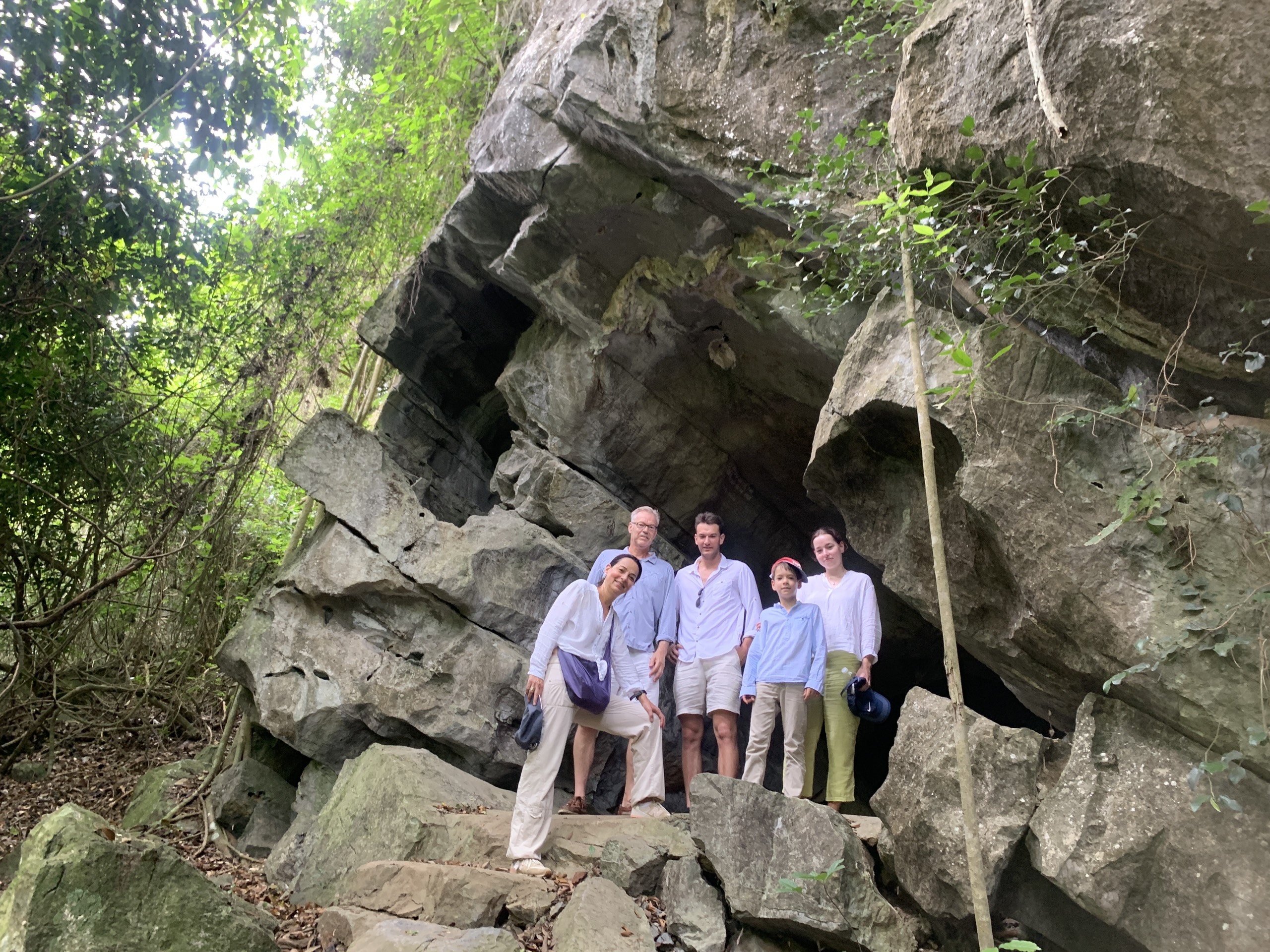
The same ticket covers Trung Trang cave a few minutes from the gate: roughly 300 m through the hill, thousands of stalactites, ordinary shoes. The cave is on this short circuit, not on the trek to Viet Hai, so if you want both, see it before you set off.
The trek across the park to Viet Hai
This is the walk the park is known for. From headquarters the trail climbs into primary forest, crosses a series of limestone ridges and drops to Ao Ech (Frog Pond), a 3.2 ha freshwater swamp forest — the only permanent fresh water in this karst, a quiet place of trees standing in dark water. From there it is another 4–7 km over the last ridge and down into the Viet Hai valley, finishing among rice fields. The whole route is 9–12 km and takes 4–5 hours; older guides say 18 km and 5–7 hours, which is wrong.
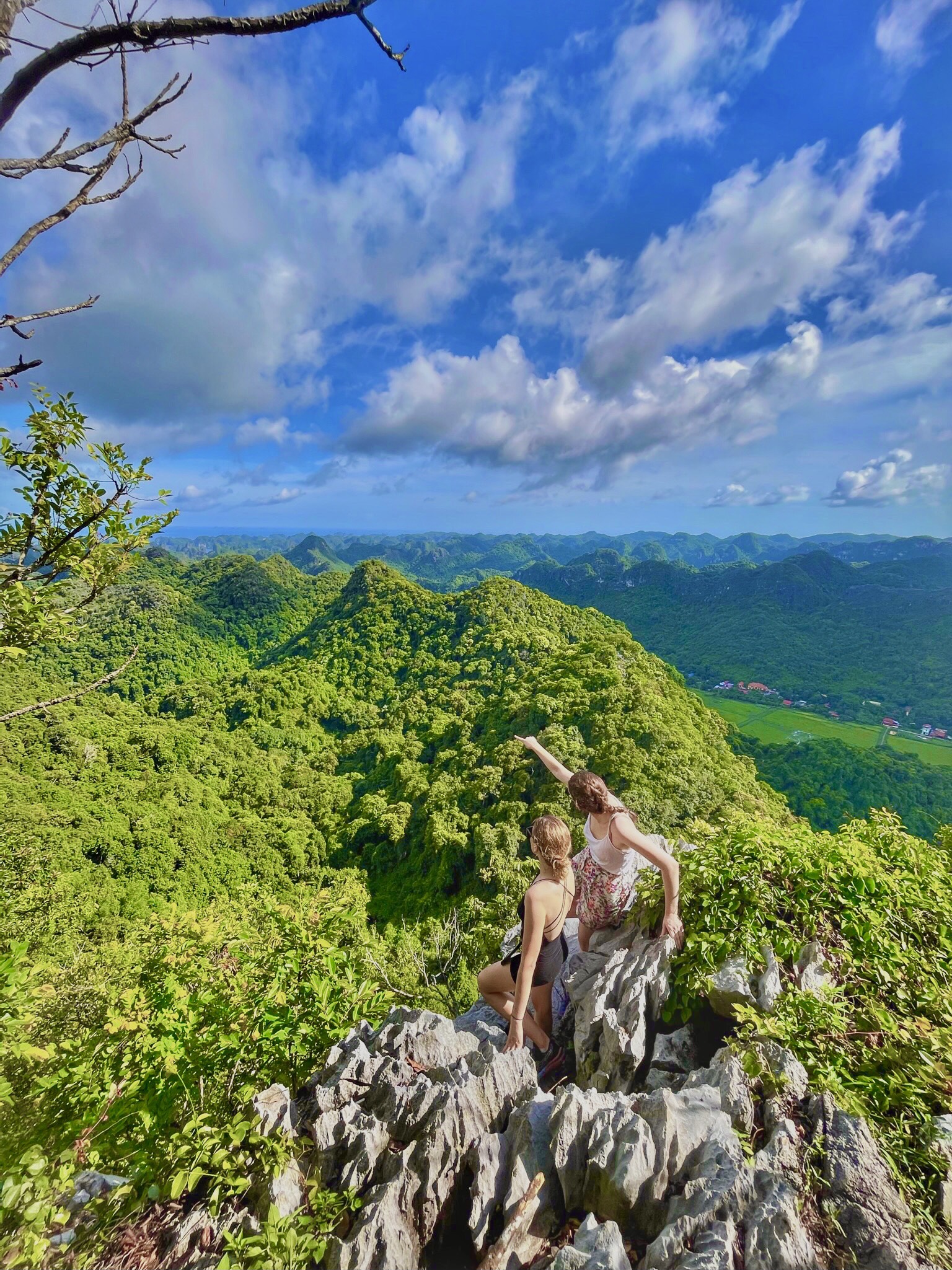
Take a guide: the path is not consistently marked, the rock is sharp, phone signal comes and goes, and there is no water on the trail. Your bags can be sent round by boat from Ben Beo to the village pier for a fixed 350,000 VND and will be in your room before you are. The full route, with our timings, is in the trek across Cat Ba National Park to Viet Hai guide.
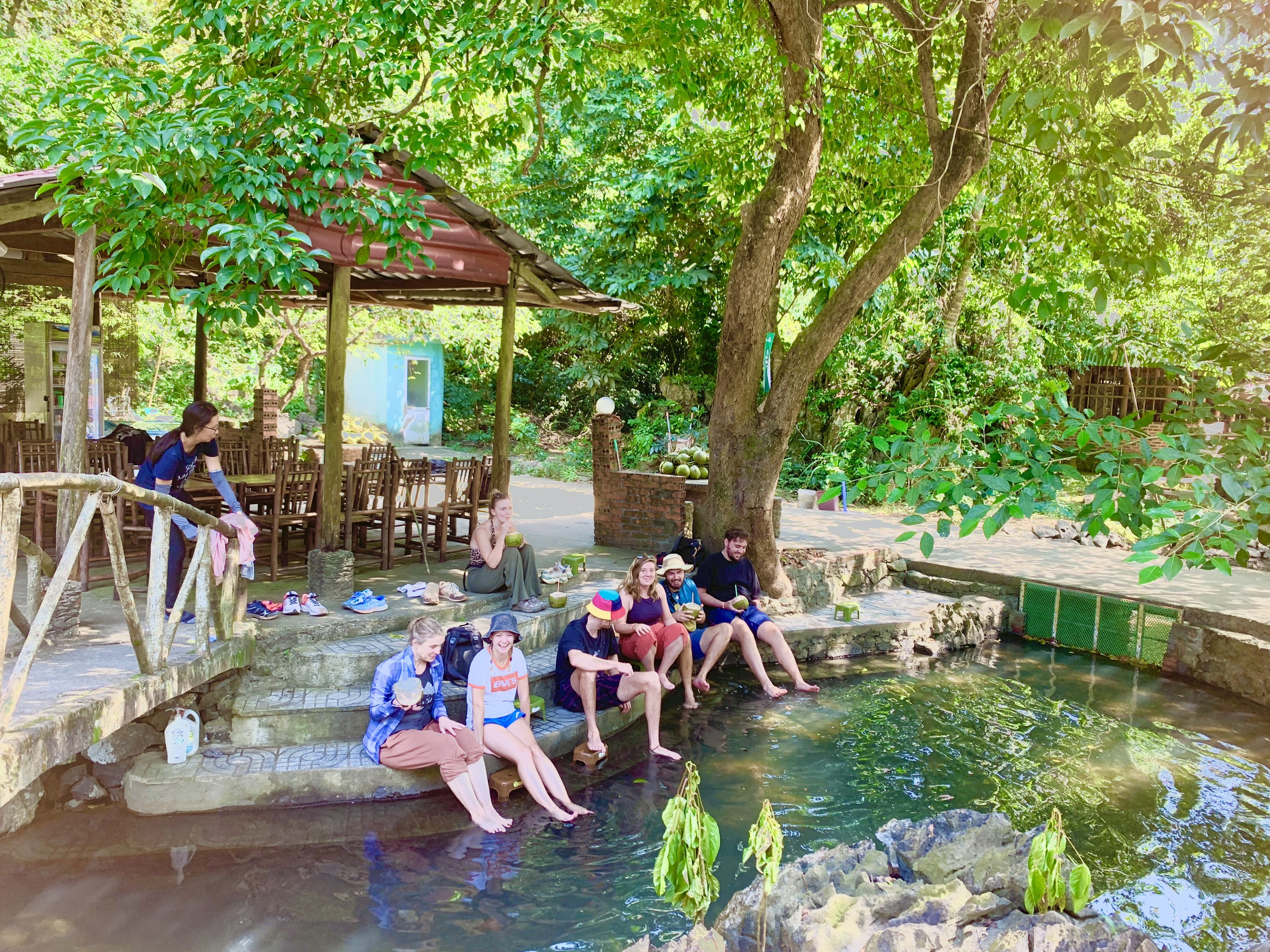
Most of our trekking guests walk in over the ridge with a guide, sleep in the valley, and go out by speedboat next morning — the reverse of the day-boat crowd. If you would rather climb than cross, the guided Navy Peak hike from our door reaches the 259 m summit in about three hours return; the 3-day cruise and homestay package folds it into a night on the bay and a night in the village.
Walks from Viet Hai village
Viet Hai lies inside the park’s core zone, and the walks below start from the village lane. For a rest day, the flat valley road and the stream where small fish nibble your feet (most fish in July–September) fill an easy morning on foot or by bicycle, 30,000 VND a day. Our Viet Hai village guide covers the valley itself.

Ninh Tiep stream and Tien Duc cave
Forty-five minutes to an hour each way (80,000 VND adult, 40,000 child). Tien Duc cave is named for a leader of the 1885–1889 uprising against the French, who retreated into this valley after a battle in 1889; older still, shell layers and bones in this cave and in Ang Giua cave show people lived here around 6,500 years ago. A longer path continues over the ridge to Ao Ech and park headquarters, about 2.5 hours further: the trek in reverse.
Navy Peak
The 259 m summit above the valley is a different mountain from Ngu Lam, though the two are often confused. In 1965 the navy built a radar station on it with help from the villagers; it was bombed so often that the equipment was moved in 1968. The climb gives a 360° view over the village, Lan Ha Bay and the southern edge of Ha Long Bay, and needs a guide.
Will I see the Cat Ba langur, or any wildlife?
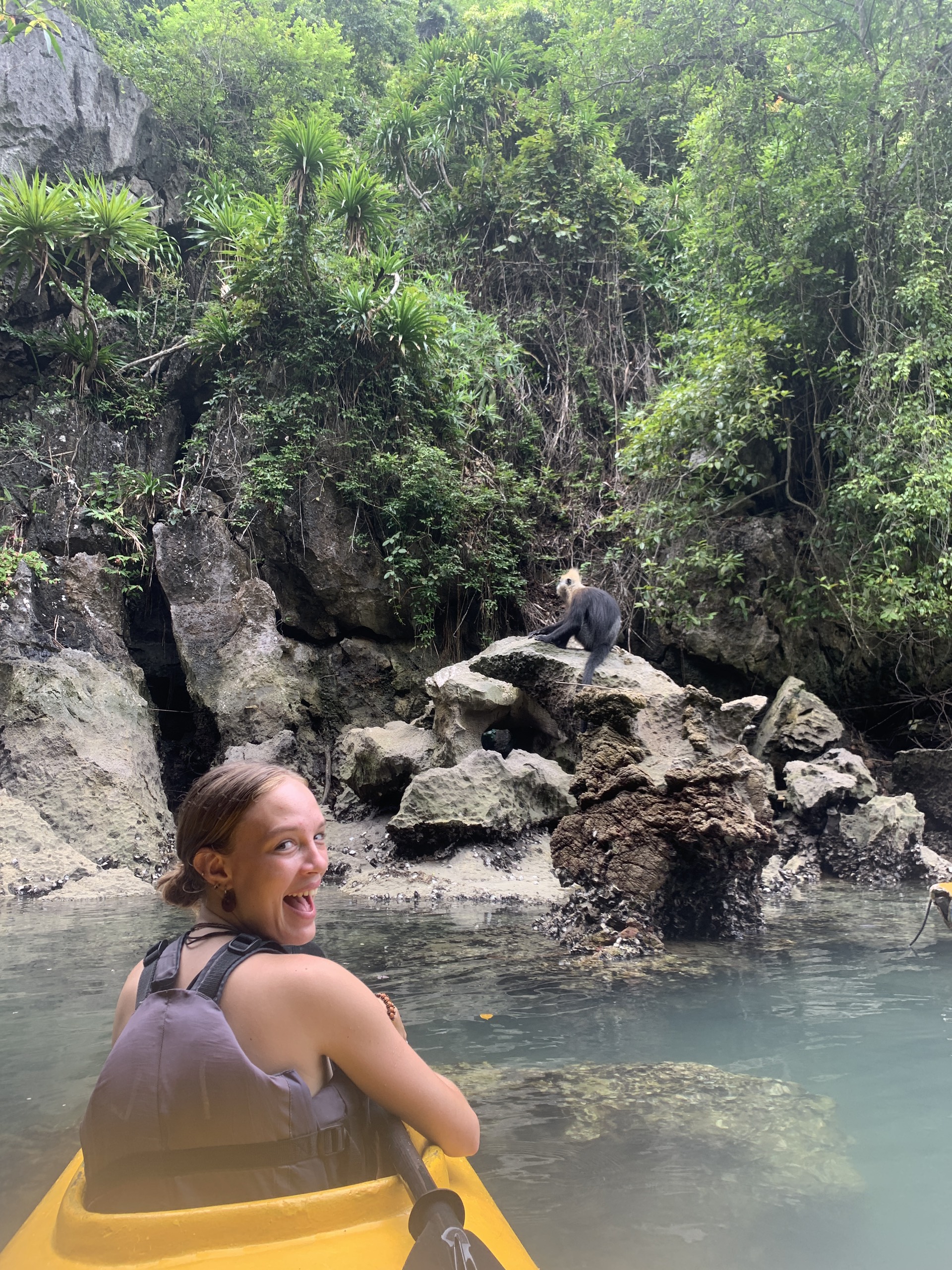
Not the langur, almost certainly, and be suspicious of anyone who promises it. The Cat Ba langur lives only on this archipelago: close to 3,000 in the 1960s, around 40 by the early 2000s, and more than 90 by October 2024, the highest in about a century. It lives on coastal limestone cliffs, not in the interior forest; the only realistic sightings are from a boat, at a distance, with binoculars, early in the morning. What trekkers meet is the macaque, along with lizards, butterflies and birdsong you hear far more than you see; larger mammals are nocturnal or scarce. If you want to try for the langur, it is a boat question rather than a walking one — see where to look for the Cat Ba langur.
Fees, and what is not included
Park fees have been fixed by Hai Phong city since 1 August 2024 — the figures in the table above, paid in cash at the gate. Guides, transport to the gate and the boat out of Viet Hai are separate; those rates move with the season and group size, so ask us for the current one. Anyone quoting a park “entry fee” several times the fixed figure is adding a margin — see Cat Ba scams and overcharging.
When is the best time to hike in Cat Ba National Park?
October and November, then March and April: clear air, dry rock, walking temperatures. Winter (December–February) is cool at 15–20°C with low cloud on the ridges — fine for the trek, poor for the view. Summer is hot and humid with afternoon storms; in July or August be at the gate by 8:00 and off the ridge before the heat. A storm warning closes the bay to boats, which matters on the Viet Hai trek because the boat is how you leave; our what to do on Cat Ba when it rains guide covers the fallback.

What to bring
- Shoes with grip. Limestone is sharp and slick when wet; sandals are a bad idea on every route except the cave.
- Two litres of water per person on the trek. There is none on the trail.
- Light long sleeves, a rain layer from May to September, and an early start — the forest is far cooler before 10:00.
- Cash. Park fees are paid at the gate and Viet Hai has no ATM. The rest is in our Cat Ba packing list.
Frequently asked questions about hiking in Cat Ba National Park
Answered by the Lan family in Viet Hai — the people who run the boats, cook the dinner and pick you up at the pier.
Is Cat Ba National Park worth visiting?
Yes, if you walk. The Ngu Lam climb gives the best view on the island for under two hours’ effort, and the trek to Viet Hai is the one genuinely wild day you can have here, ending in a valley no road reaches. Driving to the gate and looking at the sign is not worth the fee.
How long does the trek to Viet Hai take?
Four to five hours for 9–12 km, depending on the group and the ground. Add the drive from Cat Ba town to the gate and the 30-minute speedboat from the village back to Ben Beo — or stay the night in the valley, which is what most of our trekking guests do.
Do I need a guide?
For Ngu Lam and Trung Trang, no; the path is obvious. For the trek to Viet Hai and for Navy Peak, take one: the routes are not consistently marked, the karst is unforgiving and mobile signal drops in the interior. A good guide also turns a walk into a good day.
Can I hike Cat Ba National Park with children?
Ngu Lam suits children from about eight who are used to walking; Trung Trang cave suits any age; the village walk to the fish stream is easy for small children. We would not take children under about twelve on the full trek. Children pay half the park fee on every route.
Will I see the Cat Ba langur?
Not from a trail. The langur lives on coastal cliffs and is seen, when at all, from a boat with binoculars; at the last published count, in late 2024, there were more than 90. On the paths you will meet macaques, which are common and confident enough to keep away from your food.
How much does it cost, and can I pay by card?
160,000 VND per adult at the main gate, 120,000 on the Kim Giao–Ngu Lam–Trung Trang route, 80,000 on the Ninh Tiep–Tien Duc and Phu Long routes; children half, cash at the gate. There is no ATM in Viet Hai and many small places there cannot take international cards, so bring cash from Cat Ba town.
Planning a hike in Cat Ba National Park?
Tell us your dates, how far you want to walk and whether you would like to finish the day in the village. We will suggest the route, arrange a guide and the bag boat, and confirm the boat out. WhatsApp +84 363 934 325 or send a message here — we answer in English, usually within the hour.
Read next
- The trek across Cat Ba National Park to Viet Hai
- Cat Ba langur: where to look
- Things to do on Cat Ba Island
You may also like
Where to stay in Viet Hai
If this trip brings you into the village, the rooms and bungalows at Lan Homestay are a few minutes on foot from the centre: the garden bungalow (triple) works well for families, and the mountain-view double room for couples.
